
Key Takeaways
- Full Container Load (FCL) intermodal rail is the cheapest way to ship across Canada, reducing long-haul transportation spend significantly compared to over-the-road trucking.
- Shippers utilizing 53′ and 40′ containers on Canadian National (CN) and Canadian Pacific Kansas City (CPKC) networks benefit from a highly stable pricing environment that acts as a hedge against volatile diesel fuel surcharges.
- Partnering with an asset-free brokerage provides a single point of entry to Class I rail networks, securing executive-level reliability without the traditional administrative overhead.
The cheapest way to ship across Canada is intermodal rail for Full Container Load (FCL) shipments moving 800 km or more. Rail moves 40-foot and 53-foot containers on Canadian National (CN) and Canadian Pacific Kansas City (CPKC) for 30-50% less than truck on long lanes. For short hauls, truck still wins.
Supply chain executives are under immense pressure to protect profit margins while maintaining reliable delivery schedules. Over-the-road trucking has historically offered flexibility, but that flexibility comes at a steep premium on cross-country lanes. Driver shortages, equipment maintenance inflation, and unpredictable diesel costs have eroded the economic viability of long-haul trucking, explaining why shipping is so expensive in Canada.
Intermodal rail freight Canada provides a structural solution to this cost crisis. By utilizing the fixed infrastructure of Class I railway networks, shippers gain access to unparalleled fuel efficiency and pricing stability. This guide breaks down the exact mechanics of long-haul freight economics, equipment selection, and procurement strategies to help you optimize your transportation spend.
The Core Economics of Long-Haul Freight in Canada
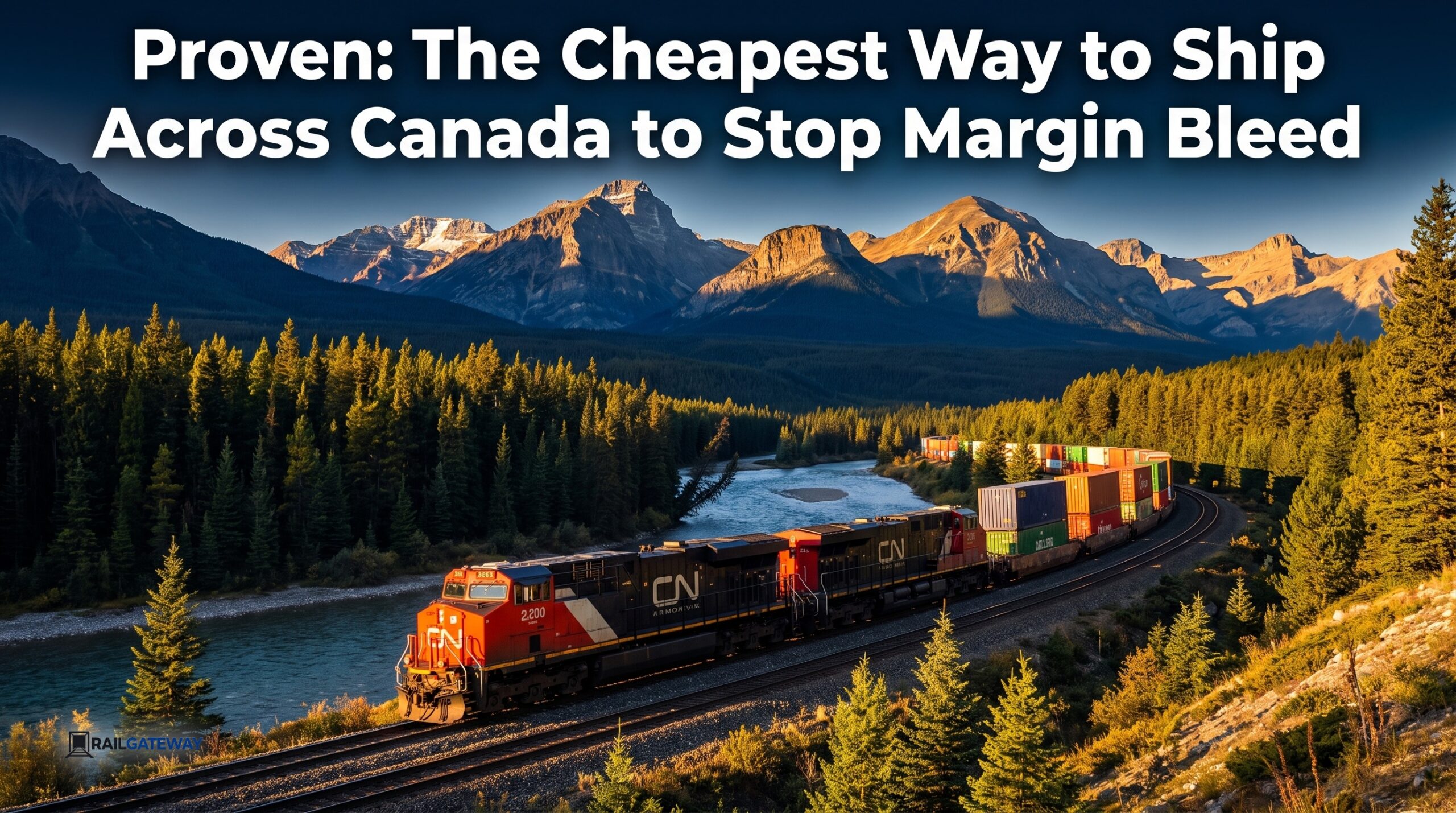
Intermodal rail freight Canada reduces long-haul transportation spend by leveraging the fuel efficiency of Class I railway networks. The fundamental advantage of rail lies in the physics of steel wheels on steel tracks, which creates significantly less friction than rubber tires on asphalt. This physical reality translates directly into massive fuel savings and lower operational costs per ton of cargo moved.
Road vs. Rail Cost Comparison
To clearly illustrate why rail is the cheapest way to ship across Canada, we must compare the core metrics of both modes. This strategic snapshot highlights the fundamental differences between over-the-road trucking and FCL intermodal rail for a standard 4,000-kilometer transcontinental lane.
| Metric | Over-the-Road Trucking | Full Container Load (FCL) Intermodal Rail | The Rail Advantage |
|---|---|---|---|
| Base Transportation Spend | Higher | Lower | Significantly lower overall costs. |
| Fuel Surcharge Impact | High volatility (substantial portion of cost) | Low volatility (highly fuel-efficient) | Protection against sudden diesel price spikes. |
| Emissions Profile | High carbon footprint | 75% lower greenhouse gas emissions | Aligns with corporate sustainability mandates. |
| Capacity Constraints | Subject to severe driver shortages | Massive scalable capacity per train | Reliable equipment availability year-round. |
| Transit Time (Toronto to Vancouver) | 3 to 4 days | 5 to 6 days | Predictable scheduling for planned inventory. |
This data clearly demonstrates that while trucking offers a slight speed advantage, the economic and environmental benefits of rail make it the superior choice for high-volume B2B shippers.
According to 2026 data from Steel Wheel Logistics, shipping via intermodal rail is far more economical than over-the-road trucking. For a standard cross-country lane like Toronto to Vancouver, this efficiency gap yields a substantial reduction in total transportation spend.
When evaluating the rail vs truck shipping cost Canada, the distance of the shipment is the primary variable. For short-haul or intra-province moves, trucking remains necessary. However, once a shipment exceeds 1,000 kilometers, the economic advantage shifts aggressively toward rail. The longer the lane, the deeper the savings. This makes intermodal rail shipping the undisputed champion for transcontinental freight.
Precision Scheduled Railroading (PSR) and Transit Reliability
The implementation of Precision Scheduled Railroading (PSR) across North American Class I networks has fundamentally changed the reliability of rail freight. Historically, rail was viewed as a slow, unpredictable alternative to trucking. PSR shifted the operational model from holding trains until they were full to running trains on strict, fixed schedules regardless of capacity.
This operational discipline means that transit times for intermodal rail freight Canada are now highly predictable. A container moving from Montreal to Calgary operates on a defined schedule, allowing supply chain managers to plan inventory cycles with confidence. While rail transit times from Toronto to Vancouver are typically 5 to 6 days, the massive cost savings and reliable scheduling make it the superior choice for planned inventory replenishment.
The Fuel Surcharge Hedge
Fuel surcharges are the silent killers of freight budgets. In the trucking sector, fuel accounts for a substantial portion of total operating costs. When diesel prices spike, truckload carriers immediately pass those costs onto shippers through aggressive fuel surcharges.
Railways are significantly more fuel-efficient. A single freight train can move one tonne of freight more than 200 kilometres on a single litre of fuel. Because fuel represents a much smaller percentage of a railway’s total operating cost, rail fuel surcharges are inherently lower and less volatile than truck surcharges. This creates a stable, predictable pricing environment that protects your bottom line from global energy market fluctuations.
Equipment Strategy: Choosing the Right Container for Your Freight
Selecting between 40′ and 53′ containers dictates your payload capacity and directly impacts your overall shipping costs. RailGateway arranges freight exclusively using Canadian National (CN)- and Canadian Pacific Kansas City (CPKC)-owned 40′ and 53′ containers, providing the exact equipment needed for commercial dock-to-dock and rail ramp moves.

Understanding the specific dimensions, weight limits, and optimal use cases for each container size is critical for maximizing your freight spend. Shipping empty air is the fastest way to ruin your cost-per-unit metrics. By aligning your cargo profile with the correct container, you ensure maximum efficiency on every load.
Maximizing Payload with 53 Foot Container Shipping Canada
For the vast majority of domestic B2B shippers, 53 foot container shipping Canada is the gold standard. These high-capacity units are designed to mirror the dimensions of a standard over-the-road dry van trailer, making them seamlessly compatible with existing warehouse loading docks and pallet configurations.
A standard 53′ domestic container offers an interior length of 52′ 4″, an interior width of 98″, and an interior height of 109″. This massive cubic capacity allows shippers to load up to 30 standard 48″ x 40″ pallets on the floor.
A 53-foot domestic container carries up to 57,300 lbs on most domestic Canadian lanes. CN sets payload limits by origin and destination lane rather than a single fleet-wide ceiling, as shown below in accordance with CN’s published equipment specifications and payload guidelines:
- Domestic Canada, most lanes (e.g. ON/QC/AB/BC to and from Maritimes/Prairies): 57,300 lbs
- Ontario/Quebec to and from Maritimes: 59,500 lbs
- Canada/Mexico into Quebec (Spring Thaw restriction): 49,600 lbs
- U.S. to and from Canada: 61,700 lbs (origin) / 41,000 lbs (destination side varies)
- Mexico to and from US/Canada: 41,000-55,000 lbs depending on direction
This makes 53 foot container shipping Canada ideal for consumer packaged goods, retail inventory, automotive parts, and bulky manufacturing components. When you maximize the cubic volume of a 53′ box, your cost per pallet drops significantly, solidifying this as the cheapest way to ship across Canada for high-volume lanes.
When to Use 40 Foot Container Rail Shipping Canada
While the 53′ container dominates domestic volume, 40 foot container rail shipping Canada plays a vital role for specific freight profiles. The 40′ container is the workhorse of international trade, but it is also highly effective for domestic moves involving dense, heavy commodities.
A standard 40′ container (Standard / Hi-Cube) has an interior length of 39′ 6″ / 39′ 6″, an interior width of 92″ / 92″, and an interior height of 94″ / 106″. It accommodates 20 standard 48″ x 40″ pallets on the floor. According to CN’s published equipment specifications, the maximum payload weight for a 40′ container varies by lane and equipment type:
- Domestic Canada, most lanes: 60,000 lbs (Dry) / 58,000-59,000 lbs (Insulated)
- Quebec Spring Thaw restriction: 52,590 lbs (Dry) / 51,000 lbs (Insulated)
- U.S. lanes: 44,000 lbs (Dry) / 39,000-42,200 lbs (Insulated, genset-dependent)
This high weight-to-volume ratio makes 40 foot container rail shipping Canada the optimal choice for heavy industrial goods, raw materials, dense machinery, and steel components. If your freight reaches the maximum legal weight limit before it fills the cubic volume of a 53′ box, paying for the extra space is a waste of capital. Switching to a 40′ container ensures you are only paying for the capacity you actually need.
The Role of Specialized Equipment: Heated and Refrigerated Containers
Beyond standard dry boxes, the Canadian climate necessitates specialized equipment for temperature-sensitive freight. During the harsh winter months, heated containers (heaters) are essential for protecting liquids, cosmetics, and certain food products from freezing. Conversely, refrigerated containers (reefers) maintain strict temperature controls for perishable goods, pharmaceuticals, and frozen foods year-round.
While specialized equipment commands a premium over standard dry containers, utilizing intermodal reefers and heaters remains significantly more cost-effective than booking specialized over-the-road temperature-controlled trailers. The railways have invested heavily in their temperature-controlled fleets, offering advanced telematics that allow shippers to monitor internal temperatures in real-time across the entire transcontinental journey. This ensures product integrity while still capturing the massive linehaul savings inherent to rail transport.
The FTL Alternative: When Full Truckload Makes Sense
While Full Container Load (FCL) intermodal rail is the cheapest way to ship across Canada for high-volume shippers, some businesses require the rapid transit times of Full Truckload (FTL) shipping. If your shipment is highly time-sensitive, paying a premium for an entire dedicated truck is necessary to meet strict delivery deadlines. In these scenarios, FTL shipping becomes the most viable solution despite the higher costs.
FTL shipping provides a dedicated trailer for your freight, moving directly from origin to destination without the terminal handling required in intermodal rail. You pay for the exclusive use of the trailer. For long-haul transcontinental moves, FTL offers faster transit times, but shippers miss out on the underlying fuel efficiency of the rail network. While the per-mile rate for FTL is higher than FCL due to fuel and driver costs, it remains the standard for expedited freight.
Benchmarking Your Freight Spend Against the Market
Understanding CN rail intermodal container shipping cost and CPKC domestic intermodal freight rates ensures you secure competitive pricing for your long-haul shipments. The Canadian rail duopoly operates vast, highly efficient networks across the country, but navigating their complex pricing structures requires specialized industry knowledge to truly optimize your transportation budget.
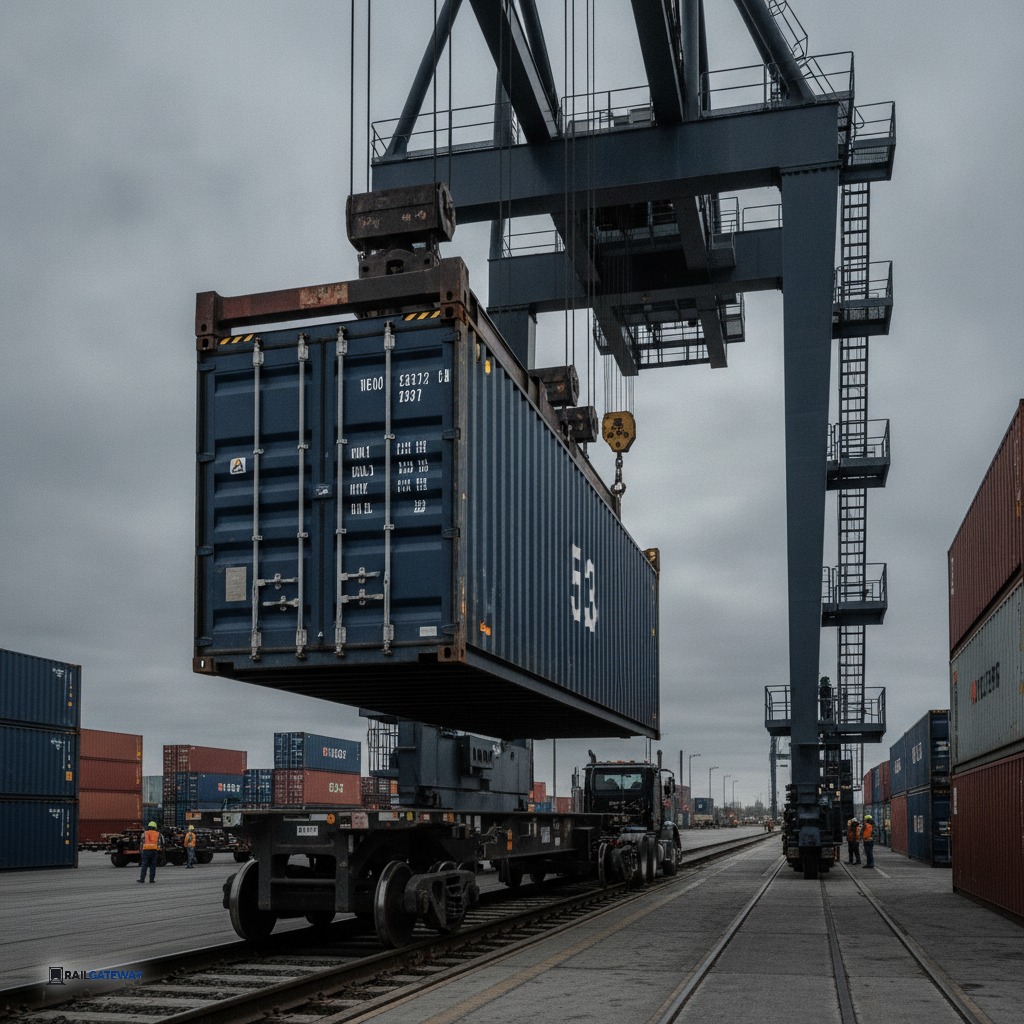
Direct shippers often struggle to benchmark their rates because Class I railways utilize complex pricing matrices based on lane density, equipment repositioning needs, and seasonal volume fluctuations. To truly find the cheapest way to ship across Canada, you must understand the underlying factors that drive these rates.
Analyzing Long Haul Intermodal FCL Rates Canada
When evaluating long haul intermodal FCL rates Canada, several key components dictate the final invoice. The base linehaul rate covers the actual rail movement from the origin ramp to the destination ramp. This rate is heavily influenced by lane balance.
For example, the lane from Toronto to Calgary is typically a headhaul lane, meaning there is high demand for westbound capacity. Conversely, Calgary to Toronto is often a backhaul lane, where railways need to reposition empty containers back to eastern manufacturing hubs. Shippers moving freight on backhaul lanes can often secure highly discounted rates, as the railways are incentivized to generate revenue on equipment that must move east regardless.
Beyond the linehaul, shippers must account for fuel surcharges and drayage costs. Drayage is the local truck movement that transports the container from your commercial dock to the rail ramp at the origin, and from the destination ramp to the final receiver. Optimizing these short-haul drayage legs is critical for keeping the total long haul intermodal FCL rates Canada as low as possible.
What Drives the 53 Ft Intermodal Container Shipping Price?
The 53 ft intermodal container shipping price is a dynamic figure that responds to market capacity and seasonal demand. During peak shipping seasons, such as the late summer and fall build-up for holiday retail, capacity tightens and rates naturally increase.
To secure the best possible 53 ft intermodal container shipping price, proactive planning is essential. Shippers who provide accurate volume forecasts and commit to consistent weekly loads are rewarded with better pricing and guaranteed equipment availability. Spot market rail rates can be volatile, so establishing contracted lane rates through a reliable brokerage is the most effective way to stabilize your budget.
For a deeper dive into optimizing your long-haul strategy, review our comprehensive guide on Intermodal vs Trucking in Canada: The Ultimate Long-Haul Freight Decision.
Navigating Peak Season Surcharges and Capacity Crunches
In the Canadian logistics market, capacity is not static. The late summer and early fall months bring a surge in volume as retailers build inventory for the holiday season, while the agricultural sector simultaneously demands massive rail capacity for the grain harvest. During these peak periods, both trucking and rail networks experience severe congestion, leading to Peak Season Surcharges (PSS).
However, the impact of these surcharges differs drastically between modes. In the trucking sector, a sudden capacity crunch can cause spot rates to double overnight as desperate shippers bid for limited trailers. Intermodal rail, by contrast, offers a much more insulated environment. Because a single train can absorb the equivalent of hundreds of trucks, the railways can manage volume spikes more efficiently. Shippers who have established consistent, year-round volume with an intermodal provider are typically shielded from the most aggressive spot market volatility, ensuring their supply chains remain both functional and financially viable even during the tightest capacity crunches.
How to Secure an Intermodal Shipping Canada Quote Without the Overhead
Partnering with an asset-free brokerage provides a single point of entry to Class I rail networks without the traditional administrative burden. Attempting to secure an intermodal shipping Canada quote directly from CN or CPKC can be a complex, time-consuming process for businesses that do not move thousands of containers annually.
Class I railways are built to handle massive scale. They prefer to deal with large aggregators and logistics providers rather than managing hundreds of individual mid-sized accounts. This is where RailGateway delivers immense value. We strip away the complexity of dealing with the railways directly.
When you request an intermodal shipping Canada quote through RailGateway, you leverage our established network density and 35 years of Canadian logistics experience. We handle the equipment procurement, the drayage coordination, the rail billing, and the proactive tracking. You receive a single, transparent invoice and executive-level reliability.
To see how this streamlined approach can impact your bottom line, explore our insights on Proven Ways to Reduce Shipping Costs in Canada.
The Financial Impact of Intermodal Rail
- Massive Fuel Efficiency: A single freight train can move one tonne of cargo more than 200 kilometres on a single litre of fuel, drastically reducing the impact of fuel surcharges on your freight bill.
- Significant Cost Reduction: Shippers converting long-haul highway freight to intermodal rail typically experience a substantial reduction in total transportation costs.
- Environmental Superiority: According to the Railway Association of Canada, shipping by rail produces 75% fewer greenhouse gas emissions than over-the-road trucking, helping businesses meet strict environmental, social, and governance (ESG) targets.
- Scalable Capacity: A single double-stacked intermodal train can remove upwards of 280 long-haul trucks from the highway, providing a massive capacity hedge during peak market crunches.

Protecting Your Margins: Risk Management and Cargo Security
Finding the cheapest way to ship across Canada is only half the battle. Protecting the financial value of that freight while it is in transit is equally critical. Intermodal rail is inherently secure. Containers are loaded at your commercial dock, sealed, and rarely opened until they reach the final receiver. The physical nature of rail yards, which are highly restricted and monitored environments, significantly reduces the risk of cargo theft compared to truck stops and highway rest areas.
Furthermore, the smooth, steel-on-steel ride of a modern freight train minimizes the vibration and impact shocks that often damage sensitive cargo on pothole-riddled highways. Proper blocking and bracing inside the container are essential, but the overall transit environment is highly stable.
However, standard carrier liability provided by railways and drayage carriers is strictly limited by weight and rarely covers the full commercial value of the goods. Carrier liability is not insurance. It requires the shipper to prove carrier negligence, a process that can take months and often results in pennies on the dollar.
While rail offers a highly secure ride, protecting high-value freight from unforeseen transit events remains a best practice. For comprehensive coverage, shippers often utilize specialized providers like ShipSimple for all-risk shipping insurance, ensuring financial protection beyond standard carrier liability. This ensures that your cost savings are not wiped out by a single catastrophic transit event.
The Strategic Shift to Rail: The cheapest way to ship across Canada
The logistics landscape in Canada is evolving rapidly. Relying solely on over-the-road trucking for transcontinental freight is a mathematical mistake that erodes profit margins. The cheapest way to ship across Canada requires a strategic shift toward high-capacity, fuel-efficient rail networks.
By understanding the nuances of the rail vs truck shipping cost Canada, selecting the optimal 40′ or 53′ equipment, and partnering with a specialized brokerage, you can transform your supply chain into a competitive advantage. RailGateway provides the pricing transparency, the operational expertise, and the single point of entry required to execute this strategy flawlessly.
Moving freight across Canada? Get a CN or CPKC rate in minutes. Fuel in. One number. Get a quote
Frequently Asked Questions
What is the cheapest way to ship across Canada for commercial freight?
The cheapest way to ship across Canada for long-haul B2B freight is Full Container Load (FCL) intermodal rail. Utilizing 40′ or 53′ containers on the CN or CPKC networks typically reduces transportation costs by 30-50% compared to over-the-road trucking, making it the most economical choice for transcontinental lanes.
How does the rail vs truck shipping cost Canada compare on long lanes?
When comparing rail vs truck shipping cost Canada, rail is significantly cheaper for distances over 1,000 kilometers. Shifting freight from over-the-road trucking to intermodal rail saves 30-50% on total transportation spend, as rail’s superior fuel efficiency protects shippers from volatile diesel fuel surcharges on long-haul routes.
How many pallets fit in a 53 foot container shipping Canada?
A standard 53 foot container shipping Canada can hold 30 standard 48″ x 40″ pallets on the floor. By maximizing this high-capacity equipment on CN or CPKC networks, shippers can achieve a 30-50% cost reduction compared to standard over-the-road dry vans, lowering their overall cost-per-unit metrics.
When should I use 40 foot container rail shipping Canada instead of a 53′ box?
You should use 40 foot container rail shipping Canada for dense, heavy freight like machinery or steel. A 40′ container holds 20 standard pallets but can carry up to 60,000 lbs on domestic lanes, allowing you to secure 30-50% savings without paying for unused cubic space.
How can I get an accurate intermodal shipping Canada quote?
To get an accurate intermodal shipping Canada quote without dealing with complex railway pricing matrices, partner with an asset-free brokerage like RailGateway. We provide a single point of entry, transparent pricing, and direct access to CN and CPKC capacity, helping you capture 30-50% savings.
What are the main cost drivers for long haul intermodal FCL rates Canada?
The main cost drivers for long haul intermodal FCL rates Canada include base linehaul rates, fuel surcharges, and local drayage. By optimizing these components and leveraging backhaul lanes, shippers can consistently achieve 30-50% savings compared to over-the-road trucking on transcontinental lanes.
How does the fuel surcharge hedge impact the cheapest way to ship across Canada?
The fuel surcharge hedge is a major driver of rail’s cost advantage. Because railways are highly fuel-efficient, their fuel surcharges are lower and less volatile than trucking. This stability helps shippers maintain a 30-50% cost reduction on long-haul lanes even during global energy market fluctuations.