
Key Takeaways
- Transitioning to intermodal rail shipping reduces transportation emissions by up to 75 percent, providing a critical hedge against the $110 per tonne industrial carbon tax arriving in 2026.
- Shippers utilizing the Montreal to Winnipeg corridor can significantly lower their exposure to volatile diesel fuel surcharges compared to over-the-road trucking.
- Optimizing payload requires strict adherence to equipment specifications, including the 60,000 lbs maximum weight limit for 40-foot containers on standard Canadian routes.
- Partnering with an asset-free brokerage provides a single point of entry to both CN and CPKC networks, ensuring year-round capacity and transparent pricing.

Securing reliable rail freight Montreal to Winnipeg is the most effective strategy for Canadian businesses to neutralize escalating fuel surcharges and rising carbon taxes. By converting long-haul highway shipments to intermodal rail shipping, shippers immediately reduce their transportation emissions by 75 percent while locking in high-capacity pricing stability. This transition is no longer just a sustainability initiative. It is a mandatory financial defense mechanism for supply chain executives managing freight across the Canadian Shield.
The logistics landscape is facing a severe regulatory shift. The Canadian industrial carbon tax is scheduled to reach $110 per tonne in 2026, a policy that will heavily penalize diesel-dependent over-the-road trucking. Businesses that fail to adapt their transportation networks will absorb these costs directly into their freight rates. RailGateway provides a streamlined solution to this impending crisis. We leverage over 35 years of Canadian logistics experience to arrange full container load freight, stripping away the complexity of dealing directly with Class 1 railways.
Our team converts the massive scale of Canada’s rail network into a direct-access advantage for B2B shippers. We focus exclusively on moving 40-foot containers from commercial docks to rail ramps. This focused approach ensures executive-level reliability and a stable hedge against the volatility of the road.
What is Intermodal Rail Shipping?
Intermodal rail shipping is the movement of freight using multiple modes of transportation – specifically, trucks and trains – without any direct handling of the freight itself when changing modes. In this model, cargo is loaded into a standardized container at the origin facility, trucked to a rail ramp, transported by train over the long-haul segment, and finally trucked to its final destination.
This seamless transition between road and rail is made possible by purpose-built intermodal containers and specialized handling equipment. When a drayage truck arrives at a rail terminal, massive gantry cranes or reach stackers lift the container directly from the truck chassis and secure it onto a flatcar or well car. Because the freight inside the container is never touched, the risk of damage, theft, or contamination is drastically reduced compared to traditional transloading methods.
For Canadian supply chains, intermodal rail shipping represents the perfect synthesis of local flexibility and long-haul efficiency. The drayage trucks provide the necessary agility to navigate urban industrial parks in Montreal and Winnipeg, while the freight trains deliver unparalleled economies of scale across the vast, unpopulated expanses of the Canadian Shield. This hybrid approach allows shippers to enjoy the door-to-door convenience of highway trucking while capitalizing on the massive cost and environmental benefits of the railway.

Why Shippers Are Abandoning Highway Freight for Rail Freight Montreal to Winnipeg
The financial argument for switching from truck to rail Quebec to Manitoba becomes undeniable when you analyze the mechanics of fuel surcharges. Trucking fuel surcharges are highly volatile. They are typically updated weekly based on retail diesel averages, leaving shippers exposed to global oil market fluctuations. In contrast, trains are on average three to four times more fuel-efficient than trucks. This data, confirmed by Transport Canada, means that rail fuel surcharges are applied to a significantly lower base consumption rate.
When evaluating the Montreal to Winnipeg freight cost, this efficiency translates into immediate margin protection. A single double-stacked intermodal train can remove hundreds of long-haul trucks from the Trans-Canada Highway. This massive consolidation of freight drastically lowers the per-unit cost of transportation. For businesses moving high volumes of consumer packaged goods, industrial materials, or manufacturing components, these savings compound rapidly over an annual shipping cycle.
Furthermore, the geography between Quebec and Manitoba presents unique challenges for highway transport. The route through Northern Ontario is notorious for severe winter weather, frequent highway closures, and unpredictable transit delays. Rail infrastructure offers a far more resilient alternative. The tracks are maintained by heavy-duty snow clearing equipment, allowing freight to keep moving when highways are completely shut down. This reliability is a core reason why supply chain leaders prioritize rail freight Montreal to Winnipeg for their critical inventory replenishments.

The Financial Impact of Carbon Taxes on Quebec to Manitoba Intermodal Rail Shipping
The regulatory environment in Canada is aggressively targeting carbon emissions. According to the Government of Canada, the industrial carbon tax will escalate to $110 per tonne by 2026. This aggressive pricing model will force trucking carriers to pass massive cost increases down to their customers. Shippers who remain entirely dependent on over-the-road transport will see their freight budgets erode rapidly.
Intermodal transport Canada offers a proven shield against this regulatory inflation. Because rail shipping generates 75 percent fewer greenhouse gas emissions than trucking, the carbon tax penalty applied to a rail container is a fraction of what it would be for a highway trailer. This structural advantage makes Quebec to Manitoba intermodal rail shipping a highly strategic choice for forward-thinking executives. By transitioning your long-haul lanes now, you establish a baseline of cost stability before the heaviest tax increases take effect.
Evaluating CN Rail Montreal to Winnipeg for Heavy Payloads
CN Rail operates a formidable network connecting Eastern Canada to the Prairies. Their infrastructure is engineered to handle massive freight volumes with precision. When utilizing CN Rail Montreal to Winnipeg, shippers gain access to highly efficient terminal operations at both the Taschereau Yard in Montreal and the Symington Yard in Winnipeg. These facilities utilize advanced gantry cranes and automated gate systems to minimize dwell times and accelerate container availability.
The Taschereau Yard in Montreal serves as a critical gateway for westbound freight, consolidating cargo from across Quebec and the Maritimes. Its strategic location allows for rapid drayage turnarounds, meaning containers spend less time sitting in traffic and more time moving toward their destination. Similarly, the Symington Yard in Winnipeg is one of the largest classification yards in Canada. It acts as the primary distribution hub for the Prairies, offering seamless connections for freight destined for local distribution centers or further transit into Western Canada.
Understanding the operational cadence of these specific yards is essential for optimizing transit times. The average transit time for rail freight from Montreal to Winnipeg is typically 4 to 6 days, depending on terminal fluidity and weather conditions. Cut-off times for outbound trains are strictly enforced, and gate congestion can fluctuate based on seasonal demand and day-of-the-week volume spikes. By aligning your warehouse loading schedules with these terminal realities, you can ensure your containers consistently make their scheduled departures, avoiding costly rollover delays.
For shippers moving dense commodities, understanding equipment specifications is critical. Maximizing payload requires strict adherence to the 40ft container weight limit CN Rail enforces across its network. The maximum payload for a standard 40-foot dry container is 60,000 lbs on standard Canadian routes, as documented by CN Rail. Exceeding this limit results in severe penalties, delayed shipments, and potential safety hazards.
Proper load distribution is just as important as total weight. The cargo must be evenly distributed across the floor of the container to prevent axle overloads on the chassis during the drayage phase. Our logistics specialists work closely with warehouse teams to ensure that every load plan complies with these strict railway regulations. This proactive approach eliminates costly rework at the rail ramp and ensures your freight moves without interruption.
Optimizing Container Space and Pallet Configurations
Warehouse managers frequently ask how many standard pallets fit in a 40 foot container to optimize their shipping schedules. A standard 40-foot dry box accommodates exactly 20 standard 48×40-inch pallets when loaded straight in, single stacked. If the cargo height permits and the weight remains under the 60,000 lbs threshold, pallets can be double-stacked to double the unit capacity.
Choosing the right container size is a fundamental step in controlling your Montreal to Winnipeg freight cost. By matching your cargo density to the appropriate equipment, you eliminate wasted space and maximize the value of every intermodal movement.
Leveraging CPKC Intermodal Quebec to Manitoba for Consistent Capacity
CPKC provides a highly competitive alternative on the Trans-Canada corridor. Their network offers distinct routing options and terminal locations that can be highly advantageous depending on your exact origin and destination points. Utilizing CPKC intermodal Quebec to Manitoba ensures that shippers are not entirely dependent on a single railway, providing a crucial layer of redundancy in your supply chain.
CPKC operates the Lachine terminal in Montreal and the Weston terminal in Winnipeg. These facilities are optimized for rapid container processing. By splitting freight volumes between CN and CPKC, businesses can hedge against localized network disruptions, labor disputes, or seasonal congestion at specific yards. This dual-network strategy is a hallmark of sophisticated intermodal transport Canada.
The Lachine terminal is strategically positioned to serve the dense manufacturing and distribution clusters in the Greater Montreal Area. Its proximity to major highways facilitates efficient drayage operations, minimizing the time trucks spend in transit between the commercial dock and the rail ramp. In Winnipeg, the Weston terminal provides a highly fluid gateway into the Manitoba market. CPKC has invested heavily in terminal automation and specialized handling equipment at these locations, ensuring that containers are processed, loaded, and dispatched with maximum efficiency.
Furthermore, CPKC’s unique network footprint offers distinct advantages for specific types of freight. Their scheduling and transit times can sometimes provide a more favorable alignment with specific production cycles or delivery windows. By continuously analyzing the performance metrics of both CN and CPKC, shippers can dynamically route their freight to capitalize on the strengths of each network, ensuring optimal performance regardless of external market conditions.
Managing relationships with multiple Class 1 railways requires significant administrative overhead. This is where a specialized Montreal to Winnipeg FCL rail brokerage delivers immense value. RailGateway acts as your single point of entry to both networks. We monitor terminal fluidity, track equipment availability, and route your freight through the most efficient channel on any given day. You receive the capacity benefits of both railways without the burden of managing multiple carrier contracts.
Road vs. Intermodal Transport Canada
Understanding the distinct advantages of rail freight requires a clear comparison of operational metrics across both modes. By evaluating fuel surcharge exposure, carbon tax impacts, and payload capacities, shippers can accurately measure the core differences between long-haul trucking and intermodal rail shipping on the Quebec to Manitoba corridor. The following table outlines these critical performance indicators.
| Metric | Over-the-Road Trucking | Intermodal Rail (FCL) |
|---|---|---|
| Fuel Surcharge Exposure | High (Tied to volatile retail diesel) | Low (Trains are 3-4x more efficient) |
| Carbon Tax Impact (2026) | Severe (High emissions per payload) | Minimal (75% lower emissions) |
| Winter Weather Resilience | Low (Subject to highway closures) | High (Dedicated snow clearing on tracks) |
| Max Payload (40′ Container) | N/A (Standard trailers used) | 60,000 lbs (CN/CPKC standard) |
| Pricing Stability | Fluctuates weekly with spot market | Highly stable, contract-based pricing |
This data clearly illustrates why switching from truck to rail Quebec to Manitoba is a strategic imperative. The cost savings are not merely theoretical. They are built into the physical efficiency of the railway infrastructure. If you are ready to analyze your specific freight profile, get an instant quote to see the exact financial impact on your bottom line.
Navigating the Transition with a Montreal to Winnipeg FCL rail brokerage
Transitioning a supply chain from highway to rail requires precise execution. Many businesses hesitate to make the switch because they fear the complexity of rail billing, chassis management, and drayage coordination. RailGateway eliminates these barriers. As an asset-free brokerage, we arrange the entire door-to-door movement using CN and CPKC equipment. We handle the dispatching of drayage trucks, the securing of ramp reservations, and the continuous tracking of your containers.
Transparency is a core pillar of our service. Clients consistently praise RailGateway Montreal to Winnipeg pricing because it is entirely straightforward. We provide 100 percent pricing transparency with no hidden accessorial fees. The rate you are quoted is the rate you pay for the agreed-upon service. This level of predictability allows financial controllers to forecast transportation budgets with absolute confidence.
Our expertise extends beyond simple transactional freight. We act as strategic advisors to our clients. With over 35 years of Canadian logistics experience, our team understands the nuances of commercial dock requirements, appointment scheduling, and seasonal capacity crunches. We build resilient routing guides that protect your freight from the inherent volatility of the open road. To discuss your specific operational challenges, contact a logistics specialist today.
The Reality of Canadian Rail Freight
- Emissions Reduction: Intermodal rail shipping reduces greenhouse gas emissions by 75 percent compared to long-haul trucking.
- Carbon Tax Escalation: The Canadian industrial carbon tax will reach $110 per tonne by 2026.
- Fuel Efficiency: Freight trains are three to four times more fuel-efficient than highway trucks.
- Payload Capacity: A standard 40-foot dry container supports a maximum payload of 60,000 lbs on CN and CPKC networks.
Protecting High-Value Cargo on the Trans-Canada Corridor
While rail freight Montreal to Winnipeg is exceptionally secure, the physical realities of moving heavy containers thousands of kilometers require prudent risk management. Cargo is subjected to harmonic vibrations, shunting forces at rail yards, and the standard risks of long-haul transit. Standard carrier liability provided by the railways is severely limited and often calculated by weight rather than the actual commercial value of the goods.
To mitigate the physical risks associated with rail transit, shippers must implement rigorous blocking and bracing protocols. Unlike highway trailers, which primarily experience forward and backward momentum, rail containers are subjected to lateral swaying and sudden longitudinal impacts during train assembly. Utilizing specialized dunnage, airbags, and load bars is non-negotiable for preventing cargo shift. A well-secured load not only protects the product itself but also ensures compliance with railway safety regulations, preventing your container from being flagged and delayed for load readjustment.
Even with perfect load securement, external factors such as derailments, severe weather events, or terminal accidents remain a possibility. This is why relying on standard carrier liability is insufficient for high-value shipments. The railways’ terms and conditions heavily restrict their financial responsibility, leaving shippers exposed to catastrophic losses in the event of a major incident.
For businesses shipping high-value commodities, relying solely on carrier liability is a dangerous financial gamble. Comprehensive protection is essential. Our sister company, ShipSimple, provides all-risk shipping insurance for freight in Canada, ensuring your bottom line is fully protected against unforeseen transit disasters. Securing proper third-party coverage guarantees that your financial interests are insulated from the moment the container leaves your Montreal dock until it arrives safely in Winnipeg.
5 Actionable Steps to Optimize Your Intermodal Supply Chain
Successfully integrating intermodal transport Canada into your logistics network requires a methodical approach. Supply chain leaders must align their internal processes with the operational realities of the railway. Here are five actionable steps to maximize the value of your rail freight strategy.
1. Audit Your Current Fuel Surcharge Exposure
The first step in building a business case for rail is understanding your current vulnerability. Analyze your historical trucking invoices to isolate the fuel surcharge costs. Calculate how much these surcharges have fluctuated over the past twelve months. By comparing this data against stable RailGateway Montreal to Winnipeg pricing, you can immediately quantify the potential savings of a modal shift.
2. Standardize Your FCL Load Plans
Efficiency at the commercial dock dictates success at the rail ramp. Work with your warehouse team to standardize pallet configurations. Ensure everyone understands exactly how many standard pallets fit in a 40 foot container. Implement strict weighing protocols to guarantee that no shipment exceeds the 40ft container weight limit CN Rail mandates. Consistent, compliant load plans prevent delays and eliminate rework costs.
3. Align with Commercial Dock Schedules
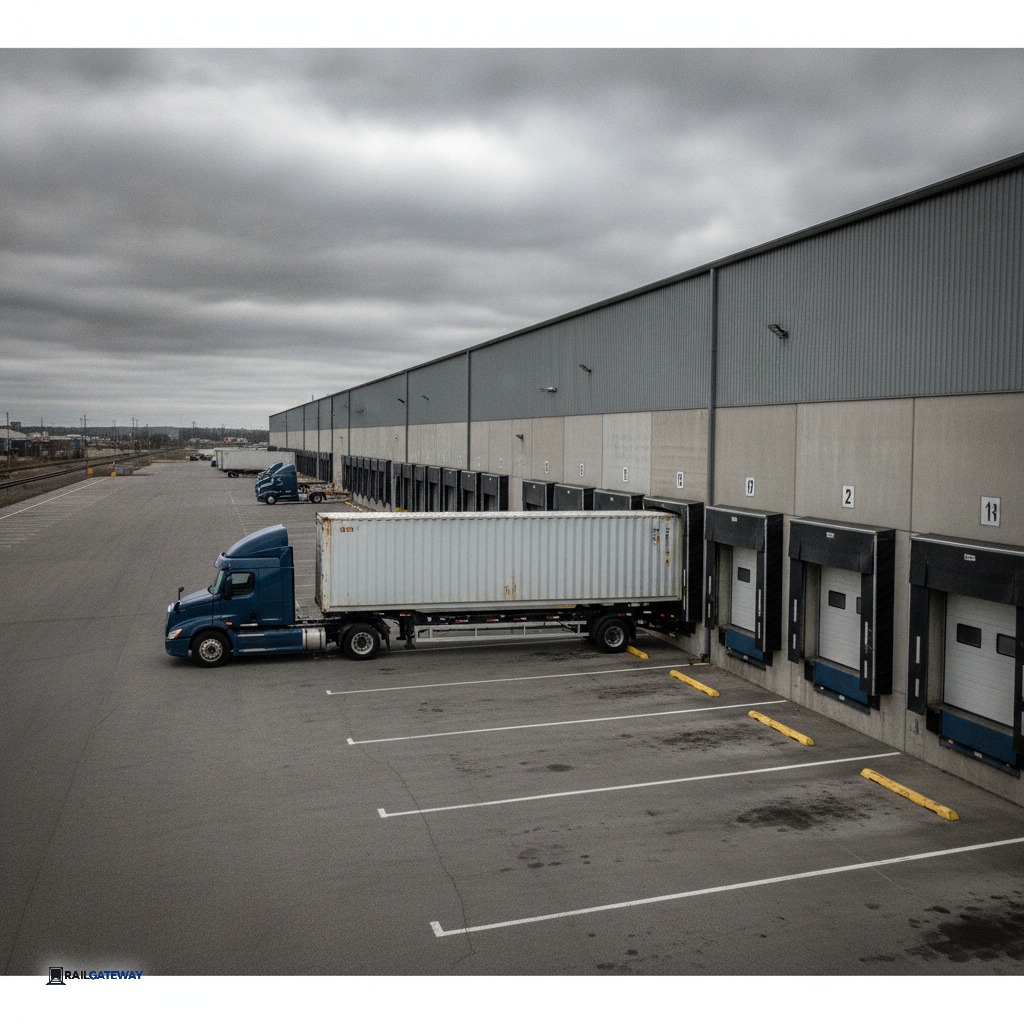
Intermodal drayage operates on tight schedules. Drivers must pick up empty containers, load at your facility, and return to the rail terminal before the daily cut-off times. Delays at your commercial dock can result in missed trains and extended transit times. Optimize your warehouse labor to ensure rapid loading and unloading of containers. Treat the drayage driver’s time as a critical asset in your supply chain.
4. Secure Year-Round Capacity Contracts
The spot market is inherently volatile. Relying on spot rates for critical freight exposes your business to massive price spikes during peak seasons or capacity shortages. Switching from truck to rail Quebec to Manitoba allows you to lock in long-term contract rates. This stability is essential for accurate financial forecasting and protects your margins from sudden market shocks.
5. Partner with an Experienced Logistics Strategist
Navigating the complexities of CN Rail Montreal to Winnipeg and CPKC intermodal Quebec to Manitoba requires deep industry knowledge. Do not attempt to manage these relationships in isolation. Partner with a specialized Montreal to Winnipeg FCL rail brokerage. An experienced partner will provide the technology, the network access, and the strategic oversight necessary to build a flawless intermodal program.
The Broader Impact on Canadian Supply Chains
The shift toward rail freight is accelerating across the country. As businesses recognize the financial and environmental benefits of intermodal shipping, capacity on the railways will become increasingly valuable. Securing your space on the Montreal to Winnipeg corridor now ensures that your supply chain remains competitive in the years ahead.
This transition is being driven by a combination of regulatory pressure, corporate sustainability mandates, and the sheer economic reality of operating in a vast country like Canada. Supply chain executives are no longer viewing rail as a secondary option for low-priority freight; it is rapidly becoming the primary mode for all long-haul domestic movements. As more volume shifts to the tracks, the railways are responding with massive capital investments in new locomotives, expanded terminal footprints, and advanced tracking technologies. This continuous improvement cycle will only further widen the efficiency gap between rail and over-the-road trucking.
Furthermore, the integration of advanced data analytics into intermodal operations is providing shippers with unprecedented visibility into their supply chains. Real-time GPS tracking, predictive ETA modeling, and automated exception alerts allow logistics managers to proactively manage inventory levels and mitigate disruptions before they impact the end customer. This level of sophistication transforms intermodal shipping from a simple cost-saving measure into a strategic tool for enhancing overall supply chain agility.
This strategy is not limited to a single lane. Similar dynamics are driving adoption across other major routes. For example, shippers are increasingly looking at Quebec to BC Intermodal Rail Shipping: Bypassing Highway Weight Limits and Spring Thaw Restrictions, as well as Quebec to Alberta Intermodal Rail Shipping: Protecting Margins Against Long-Haul Trucking Costs. The fundamental advantages of rail apply universally across long-haul Canadian logistics.
By embracing intermodal transport Canada, you are not just cutting costs. You are building a resilient, scalable, and sustainable supply chain capable of withstanding the regulatory and economic pressures of the future. The 75 percent reduction in emissions and the massive fuel efficiency gains provide a permanent competitive advantage over businesses that remain tethered to the highway.
To explore how these strategies can be applied to your specific freight profile, learn more about intermodal rail shipping and discover the full capabilities of our asset-free brokerage model. RailGateway is ready to transform your logistics network with executive-level reliability and absolute pricing transparency. Take control of your freight costs today and build a supply chain designed for the realities of 2026 and beyond.
Frequently Asked Questions
How does rail freight Montreal to Winnipeg protect against carbon taxes?
Rail freight generates 75% fewer emissions than over-the-road trucking. This massive reduction in greenhouse gases significantly lowers your exposure to the Canadian industrial carbon tax, which is scheduled to reach $110 per tonne in 2026.
What is the 40ft container weight limit CN Rail enforces?
The maximum payload for a standard 40-foot dry container on CN Rail’s standard Canadian routes is 60,000 lbs. Strict adherence to this limit is required to avoid penalties and ensure safe drayage operations.
How many standard pallets fit in a 40 foot container?
A standard 40-foot dry container can accommodate exactly 20 standard 48×40-inch pallets when loaded straight in and single-stacked. Double-stacking is possible if cargo height and weight limits permit.
Why use a Montreal to Winnipeg FCL rail brokerage instead of booking direct?
An asset-free brokerage like RailGateway provides a single point of entry to both CN and CPKC networks. The brokerage handles all drayage, ramp reservations, and tracking, offering 100% pricing transparency without the administrative burden of managing direct railway contracts.
Is CPKC intermodal Quebec to Manitoba a reliable alternative to CN?
Yes, CPKC offers highly competitive and reliable intermodal service between their Lachine terminal in Montreal and Weston terminal in Winnipeg. Utilizing both networks provides crucial redundancy and protects against localized capacity constraints.
What is the average transit time for rail freight from Montreal to Winnipeg?
The average transit time for rail freight from Montreal to Winnipeg is typically 4 to 6 days. This timeline can fluctuate based on terminal fluidity, seasonal weather conditions, and adherence to outbound train cut-off times.
Are there restrictions for shipping hazardous materials via rail freight from Montreal to Winnipeg?
Yes, shipping hazardous materials via intermodal rail requires strict compliance with Transport Canada regulations and specific railway policies. Certain dangerous goods may be restricted or require specialized documentation, placarding, and pre-approval before they can be loaded onto CN or CPKC networks.
Are temperature-controlled containers available for Quebec to Manitoba intermodal rail shipping?
Yes, temperature-controlled intermodal containers are available for freight requiring climate control, such as food products or sensitive chemicals. However, capacity for these specialized 40-foot containers is limited and must be booked well in advance through your rail brokerage to ensure availability on the Montreal to Winnipeg corridor.