
Key Takeaways
- Bypassing the Trans-Canada Highway through the Canadian Shield eliminates severe winter weather delays and secures year-round freight capacity.
- Intermodal rail shipping offers a 75% reduction in greenhouse gas emissions compared to over-the-road trucking, significantly lowering carbon tax exposure.
- Shippers can maximize payloads up to 60,000 lbs by utilizing standard 40-foot full container loads on dedicated rail networks, taking advantage of RailGateway’s highly competitive rates.
- Partnering with an asset-free brokerage provides a single point of entry to both CN and CPKC networks without the traditional administrative overhead.
Securing reliable rail freight from Ontario to Manitoba requires bypassing the volatile Trans-Canada Highway through the Canadian Shield. By leveraging Canadian National (CN) and Canadian Pacific Kansas City (CPKC) intermodal networks, shippers gain a high-capacity hedge against winter disruptions and fluctuating road costs. Moving 40-foot full container loads (FCL) directly from commercial docks in Ontario to rail ramps in Manitoba eliminates the traditional overhead of dealing with Class 1 railways. This streamlined approach provides executive-level reliability for B2B supply chains.

Canadian logistics professionals understand that the corridor connecting Central Canada to the Prairies is one of the most critical links in the national supply chain. However, relying exclusively on over-the-road trucking exposes businesses to severe weather risks, unpredictable fuel surcharges, and strict weight limitations. Transitioning to a dedicated intermodal strategy transforms these vulnerabilities into a competitive advantage. With over 35 years of Canadian logistics experience, our team recognizes that a stable supply chain requires structural resilience.
1. Bypassing the Canadian Shield Highway Bottleneck
The geographic reality of moving goods westward involves navigating the Canadian Shield. This massive geological formation creates significant logistical hurdles for commercial trucking. By shifting volume to the railway, businesses immediately insulate their supply chains from the most severe highway disruptions.
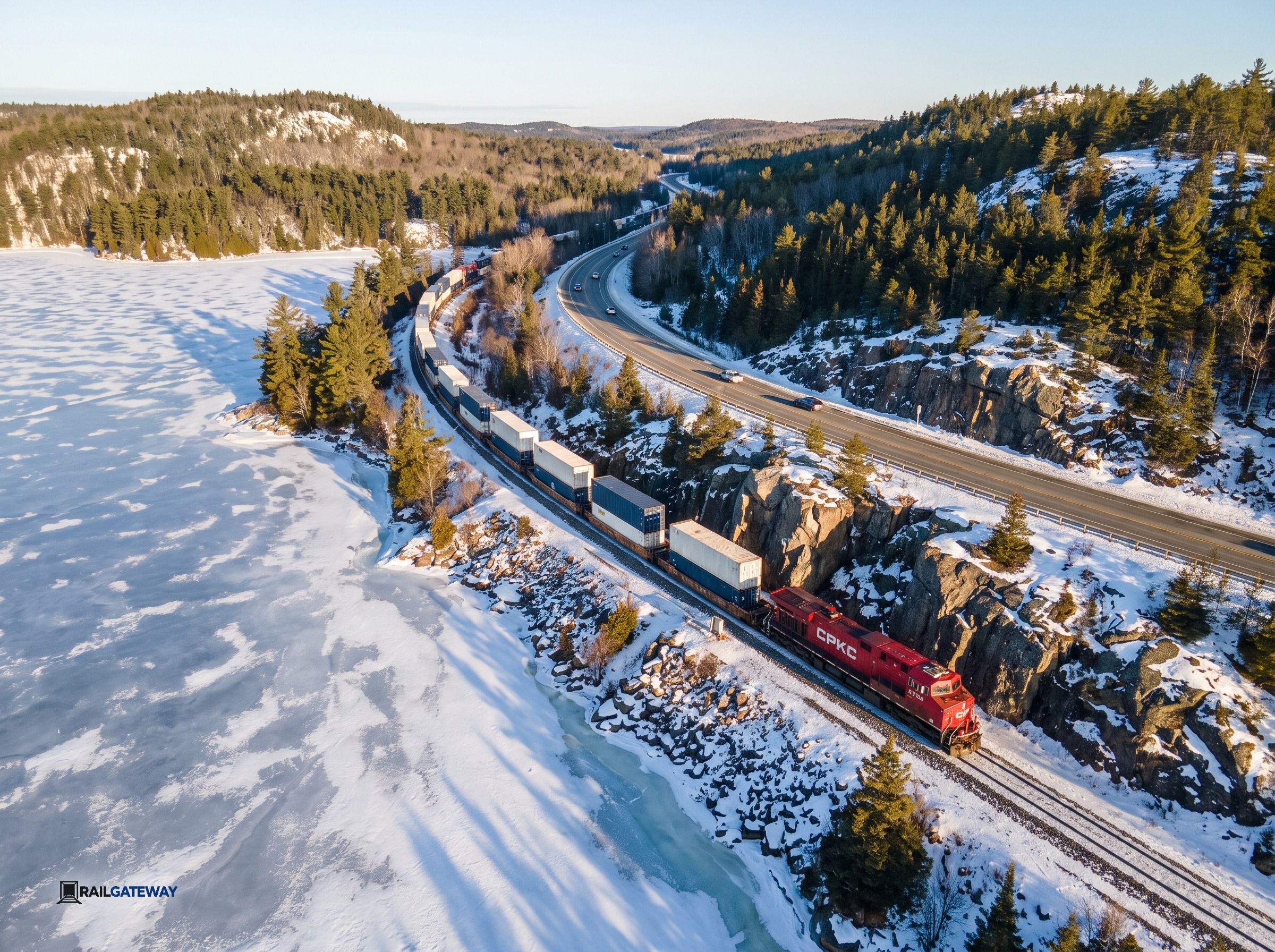
How Winter Weather Impacts Highway 17 and 11
The stretch of the Trans-Canada Highway between Sudbury and Thunder Bay is notorious for sudden closures. Heavy snowfall, freezing rain, and limited passing lanes create a highly volatile environment for long-haul trucks. When an accident or severe storm closes the highway, commercial trucks are forced to idle for days. This bottleneck destroys delivery schedules and inflates operational costs. Securing rail freight from Ontario to Manitoba completely bypasses these vulnerable asphalt corridors. Trains continue to move efficiently through conditions that force trucks off the road.
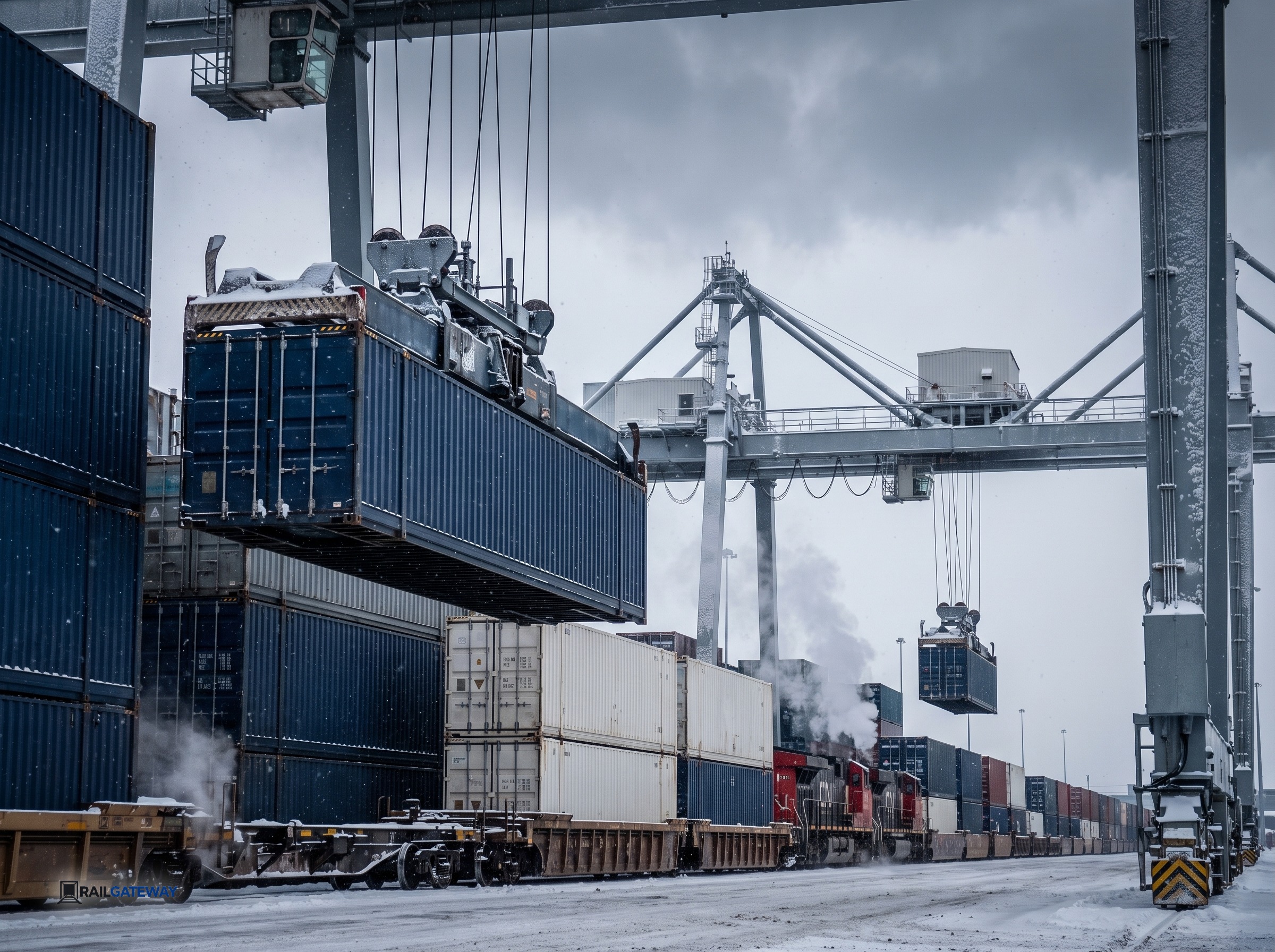
The Engineering Advantage of Dedicated Rail Infrastructure
Railways are engineered specifically to withstand the harsh Canadian climate. According to the Railway Association of Canada, rail infrastructure offers superior safety and reliability during extreme weather events. Heavy-duty steel tracks, advanced snow-clearing equipment, and automated signaling systems ensure that freight keeps moving. This dedicated infrastructure provides a massive advantage over public highways shared with passenger vehicles. When you are switching from truck to rail Ontario to Manitoba, you are upgrading from a shared public utility to a highly controlled industrial network.
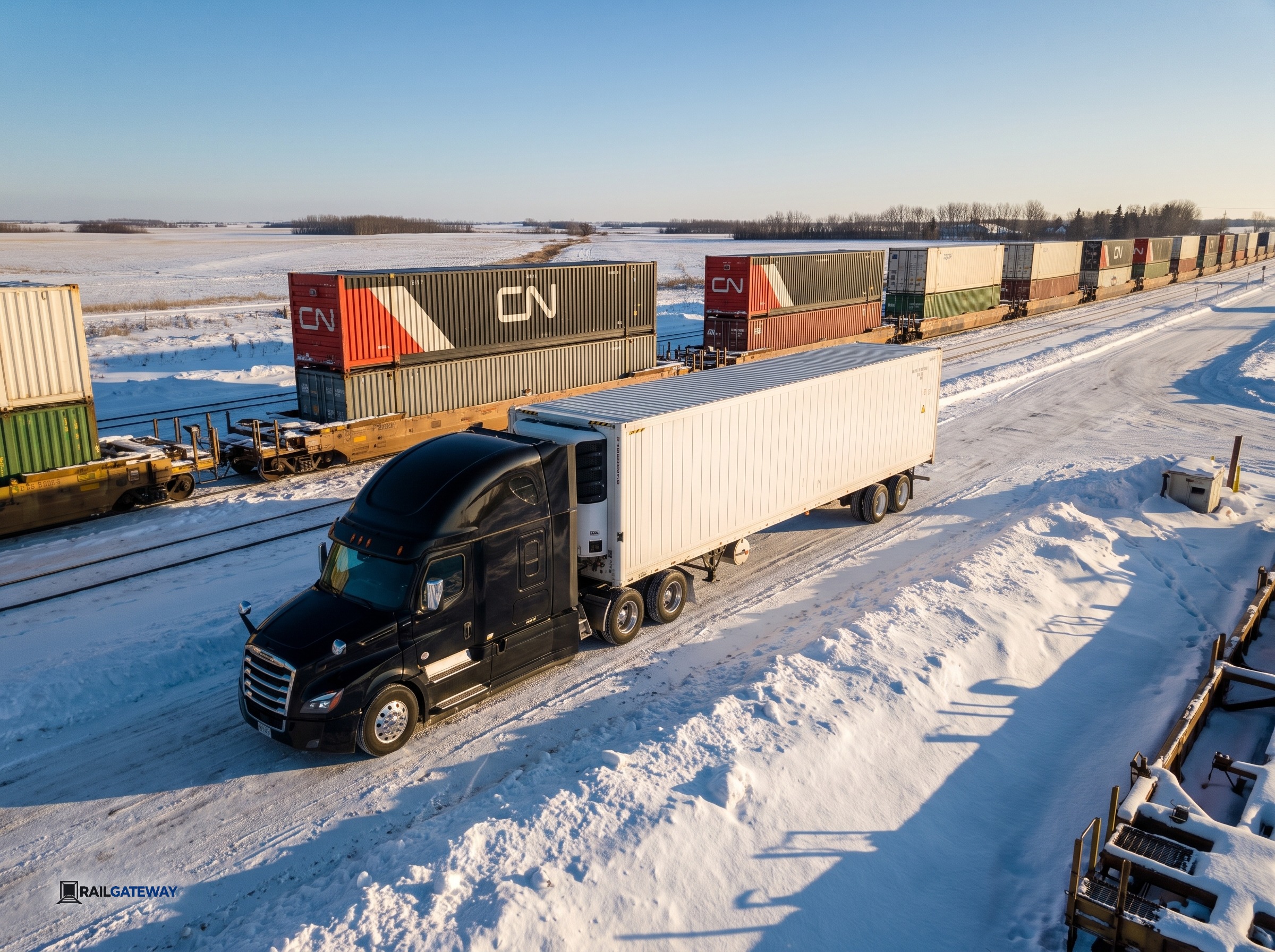
Mitigating Supply Chain Disruptions During Peak Season
Peak shipping seasons often align with the most unpredictable weather patterns in late autumn and early winter. Relying on trucks during this period guarantees exposure to capacity crunches and premium spot rates. Intermodal rail shipping provides a stable, high-capacity alternative. By locking in rail freight from Ontario to Manitoba, supply chain executives ensure their goods arrive on schedule regardless of highway conditions. This proactive strategy protects client relationships and prevents costly stockouts at destination facilities.
Protecting Sensitive Freight with Temperature-Controlled Reefers
Extreme winter temperatures across the Canadian Shield pose a severe risk to freeze-sensitive goods. To fully address winter shipping risks, shippers utilize temperature-controlled containers, commonly known as reefers. These specialized units maintain precise internal climates regardless of external blizzards or sub-zero conditions. By integrating reefers into your rail freight from Ontario to Manitoba strategy, you guarantee that perishable or temperature-sensitive B2B products arrive intact, completely eliminating the threat of weather-related spoilage.
2. Stabilizing the 40 foot container
Financial predictability is a core requirement for any successful B2B enterprise. The volatility of the trucking market makes long-term budgeting nearly impossible. Intermodal rail shipping introduces a level of pricing transparency and stability that over-the-road transport simply cannot match, allowing businesses to accurately forecast their annual logistics spend.
Understanding Fuel Surcharge Volatility on the Road
Diesel fuel prices fluctuate wildly based on global market conditions. Trucking companies pass these costs directly to shippers through aggressive fuel surcharges. Because trucks consume significantly more fuel per ton-mile than trains, these surcharges represent a massive portion of the overall invoice. Rail freight from Ontario to Manitoba operates with a much lower fuel burden. Trains are highly fuel-efficient, meaning the fuel surcharge applied to an intermodal container is a fraction of what a truck would demand. This efficiency directly stabilizes the 40 foot container.
The Financial Impact of Carbon Taxes on Long-Haul Freight
As environmental regulations tighten, carbon taxes are becoming a major line item in logistics budgets. Over-the-road trucking generates substantial greenhouse gas emissions, exposing shippers to escalating tax penalties. Intermodal rail shipping produces 75% fewer emissions than road freight. This massive reduction not only supports corporate sustainability goals but also acts as a financial shield against rising carbon taxes. For a deeper understanding of these economic pressures, review our analysis on why shipping is so expensive in Canada.
Achieving Predictable Margins with Intermodal Pricing
Budgeting for long-haul logistics requires accurate forecasting. Freight shipping from Toronto to Winnipeg is built on 100% transparency. We strip away the hidden fees and complex tariff structures typically associated with Class 1 railways. By providing clear, upfront rates for full container loads, we allow financial controllers to accurately project their transportation spend. This predictability is a critical tool for protecting profit margins in a competitive marketplace. If you are ready to stabilize your budget, get a quote today.
What Are the Baseline Cost Estimates for Ontario to Manitoba?
When planning your logistics budget, having baseline cost estimates is essential for covering obvious follow-ups from financial stakeholders. While exact rates fluctuate based on seasonal demand and fuel surcharges, baseline cost estimates for moving a standard 40-foot container from Ontario to Manitoba generally range between $2,500 and $3,500 CAD. Because intermodal rail shipping operates with a much lower fuel burden than over-the-road trucking, these baseline costs remain far more stable throughout the year, shielding your business from sudden spot-market spikes.
3. Maximizing Payload with 40 Foot Container Dimensions
Efficiency in logistics is driven by maximizing the volume and weight of every shipment. Intermodal rail shipping offers superior payload capabilities compared to standard highway trailers, allowing businesses to move more product with fewer shipments while significantly reducing the per-unit transportation cost for heavy B2B freight.
Standard Specifications for Full Container Loads
Understanding the exact 40 foot container dimensions is essential for optimizing your freight build. A standard 40-foot dry container provides approximately 2,350 cubic feet of interior space. This standardized equipment is designed to transition seamlessly from a commercial dock to a rail chassis and onto a flatcar. By utilizing these precise dimensions, shippers can engineer their pallet configurations to eliminate dead space. This level of optimization ensures that you are not paying to ship empty air across the country.
What Are the Exact LxWxH Container Dimensions?
To fully maximize your payload, logistics planners must design shipments around the exact LxWxH container dimensions. Internally, a standard 40-foot dry container measures approximately 39.5 feet in length (L), 7.7 feet in width (W), and 7.9 feet in height (H). Knowing these exact LxWxH container dimensions allows warehouse teams to calculate precise pallet stacking arrangements, ensuring that heavy B2B freight is loaded safely and efficiently without exceeding the physical boundaries of the container.
Optimizing Weight Distribution for Heavy B2B Freight
Weight limits on public highways are strictly enforced to protect road surfaces. These regulations often force shippers to underload their trailers. The rail network operates under entirely different engineering constraints. The 40ft container weight limit Canada rail allows for significantly heavier payloads. According to CN Rail, the maximum payload for a standard 40-foot dry container on standard Canadian routes is 60,000 lbs. This increased capacity is a game-changer for industries shipping dense materials like lumber, steel, and heavy machinery.
Eliminating Dead Space in High-Capacity Shipments
Maximizing the utility of every container requires strategic loading practices. Proper blocking and bracing techniques ensure that heavy freight remains secure during transit while utilizing every available inch of the 40 foot container dimensions. When you maximize both volume and weight, the per-unit cost of your goods drops significantly. This efficiency is a primary reason why high-volume shippers prefer rail freight from Ontario to Manitoba over traditional trucking. To explore different equipment options, read our guide on the types of shipping containers.
4. Leveraging CN Rail for Ontario to Manitoba Infrastructure
CN Rail operates one of the most extensive and efficient rail networks in North America, offering a highly reliable corridor for westbound freight. Their infrastructure connecting Ontario to Manitoba is a marvel of modern logistics engineering, providing shippers with unparalleled, high-capacity access to Western markets.
Operations at the Brampton Intermodal Terminal
The journey for CN Rail for Ontario to Manitoba shipments typically begins at the Brampton Intermodal Terminal. This massive facility serves as the primary consolidation point for freight originating in the Greater Toronto Area. Advanced gantry cranes and automated gate systems ensure that containers are processed and loaded onto railcars with incredible speed. The efficiency of this terminal minimizes dwell times and ensures that your freight departs on schedule.
Streamlined Receiving at Symington Yard
Upon arriving in Manitoba, freight is processed through CN’s Symington Yard in Winnipeg. This facility is one of the largest classification yards in Canada. The streamlined operations at Symington ensure that containers are quickly transferred from railcars to chassis for final drayage delivery. This rapid turnaround is essential for maintaining the velocity of your supply chain. For a comprehensive look at these operations, consult our ultimate guide to CN intermodal.
Daily Departures and Consistent Transit Schedules
Reliability is built on consistency. CN Rail for Ontario to Manitoba service features daily departures, providing shippers with the flexibility to move freight exactly when it is ready. This high frequency of service eliminates the need to stockpile inventory while waiting for a weekly train. Consistent transit schedules allow supply chain managers to implement just-in-time inventory practices, reducing warehousing costs and improving overall cash flow.
5. Utilizing CPKC for Ontario to Manitoba Lanes
In addition to CN, CPKC offers a highly competitive and robust network connecting Central Canada to the Prairies. Utilizing both Class 1 railways provides shippers with a diversified strategy that guarantees capacity even during peak demand periods. This dual-network approach ensures that critical B2B supply chains remain fully operational and insulated from localized disruptions year-round.
High-Speed Capacity from Vaughan to Weston
CPKC for Ontario to Manitoba shipments generally originate at the Vaughan Intermodal Terminal. This state-of-the-art facility is strategically located to serve the northern and western manufacturing hubs of the GTA. Freight travels rapidly across the CPKC network, arriving at the Weston Yard in Winnipeg. This dedicated lane offers highly competitive transit times that rival over-the-road trucking, without the associated weather risks or fuel surcharges.
Dual-Network Strategies for Maximum Reliability
Relying on a single carrier exposes your supply chain to localized disruptions. By leveraging both CN and CPKC networks, RailGateway provides a dual-network strategy that ensures continuous freight movement. If one network experiences a delay due to track maintenance or extreme weather, freight can be seamlessly routed through the alternative network. This redundancy is a critical component of securing reliable rail freight from Ontario to Manitoba.
Securing Priority Placements During Capacity Crunches
During peak shipping seasons, securing space on a train can be challenging for direct shippers. As a high-volume intermodal brokerage, RailGateway has established deep relationships with both Class 1 railways. This allows us to secure priority placements for our clients’ CPKC for Ontario to Manitoba shipments. We ensure your freight moves when you need it to move. Learn more about these advantages in our CPKC intermodal shipping guide.
6. Partnering with a Toronto to Winnipeg FCL Rail Brokerage
Navigating the complexities of Class 1 railways requires specialized knowledge and significant administrative resources. Partnering with an asset-free Toronto to Winnipeg FCL rail brokerage strips away this overhead, allowing you to focus on your core business operations. By consolidating billing, tracking, and drayage into a single service, shippers gain executive-level reliability without the traditional administrative burden.
The Value of a Single Point of Entry
Dealing directly with railways involves navigating complex tariffs, managing chassis pools, and coordinating separate drayage providers. RailGateway acts as your single point of entry. We handle every aspect of the move from your commercial dock in Ontario to the receiving ramp in Manitoba. As a specialized Toronto to Winnipeg FCL rail brokerage, we consolidate all logistics, tracking, and billing into one streamlined process.
Executive-Level Reliability and Proactive Tracking
Visibility is critical for managing B2B supply chains. Our team utilizes advanced tracking systems to monitor your freight’s progress across the country. We provide proactive updates, ensuring that your receiving teams are prepared for the container’s arrival. This executive-level reliability eliminates the guesswork and stress typically associated with long-haul logistics. While RailGateway arranges the physical movement of your freight, securing comprehensive cargo insurance through a specialized provider like ShipSimple protects your high-value assets against unforeseen transit disruptions.
Simplifying Complex Class 1 Railway Requirements
Railways operate under strict regulatory and operational guidelines. Improperly blocked freight or incorrect documentation can result in severe delays and financial penalties. Our team of logistics specialists ensures that every shipment complies with all railway requirements before it leaves your facility. This meticulous attention to detail prevents costly rejections at the terminal.
Navigating Restrictions on Hazardous Materials
When shipping via Class 1 railways, it is critical to understand the strict restrictions on hazardous materials. Certain classes of dangerous goods, such as explosives, toxic inhalation hazards, and highly flammable liquids, require specialized documentation, specialized containers, and often incur premium surcharges or outright embargoes on standard intermodal lanes. RailGateway works directly with shippers to classify freight correctly, ensuring that any permitted hazardous materials comply fully with Transport Canada and railway-specific safety regulations before arriving at the terminal. If you need expert guidance on your next shipment, contact a logistics specialist today.
7. Scaling Broadly with Freight Shipping Canada Networks
The corridor between Ontario and Manitoba is just one segment of a massive national logistics network. Understanding how this lane integrates into the broader Canadian supply chain is essential for scaling your business operations nationwide. By optimizing this central route, shippers can seamlessly connect eastern manufacturing hubs with western consumer markets.
Connecting Central Manufacturing to Western Markets
Toronto serves as the manufacturing and distribution hub for much of Canada. Winnipeg acts as the gateway to the West, distributing goods throughout the Prairies and into British Columbia. Ontario to Manitoba intermodal shipping is the critical artery connecting these two economic engines. By mastering this specific lane, businesses establish a reliable foundation for expanding their sales and distribution networks across the entire country.
The Environmental Mandate for 75% Lower Emissions
Corporate sustainability is no longer optional. Major retailers and industrial partners increasingly require their suppliers to demonstrate a commitment to reducing carbon footprints. Freight shipping Canada via intermodal rail shipping provides an immediate and measurable environmental benefit. Achieving a 75% reduction in emissions compared to highway trucking allows your business to meet strict environmental mandates while simultaneously lowering transportation costs.
Future-Proofing Your Logistics Strategy
The logistics landscape is constantly evolving. Driver shortages, fluctuating fuel costs, and tightening environmental regulations will continue to pressure over-the-road trucking. According to Statistics Canada, over 36.5 million tonnes of freight were moved in Canada by intermodal containers on rail flat cars in 2022. This massive volume proves that the industry is already shifting. By embracing rail freight from Ontario to Manitoba today, you are future-proofing your supply chain against the volatility of tomorrow. To dive deeper into this transition, explore our comparison of intermodal vs trucking for long-haul freight.
8. The Role of Technology in Modern Rail Freight from Ontario to Manitoba
The modern intermodal rail shipping network is no longer just about steel wheels on steel rails; it is a highly digitized ecosystem. Advanced technology plays a critical role in ensuring that rail freight Toronto to Winnipeg remains competitive, transparent, and highly efficient for B2B shippers. By integrating cutting-edge software and hardware, railways and brokerages provide unprecedented visibility into the supply chain.
Real-Time Telematics and Container Tracking
Historically, one of the primary criticisms of rail freight was a lack of visibility compared to GPS-tracked trucks. Today, that gap has been completely closed. Modern 40-foot containers are increasingly equipped with advanced telematics devices. These sensors provide real-time GPS location data, temperature monitoring, and impact detection. When you secure rail freight from Ontario to Manitoba, this data is fed directly into centralized logistics platforms. Supply chain managers can monitor their freight’s exact location as it traverses the Canadian Shield, allowing for precise arrival forecasting and improved dock scheduling at the destination facility.
Predictive Analytics for Supply Chain Management
Beyond simple location tracking, the data generated by intermodal networks is being leveraged through predictive analytics. By analyzing historical transit times, weather patterns, and terminal congestion metrics, advanced algorithms can predict potential delays before they occur. This proactive approach allows logistics providers to dynamically reroute freight or adjust delivery expectations in real-time. For businesses relying on Ontario to Manitoba intermodal shipping, predictive analytics transforms supply chain management from a reactive scramble into a highly orchestrated, strategic operation. This level of insight is invaluable for maintaining lean inventory models and reducing safety stock requirements.
Automated Gate Systems at Intermodal Terminals
Efficiency at the terminal level is just as critical as the speed of the train itself. Both CN and CPKC have invested heavily in Automated Gate Systems (AGS) at their major hubs, including Brampton and Vaughan. These systems utilize optical character recognition (OCR) and biometric scanning to process drayage trucks in a matter of seconds. When a truck arrives to drop off or pick up a container for CPKC for Ontario to Manitoba routing, the AGS automatically verifies the container number, chassis, and booking details. This automation drastically reduces truck idling times, eliminates manual paperwork errors, and ensures a seamless transition between the highway and the railway. The result is a faster, more reliable supply chain from origin to destination.
9. Overcoming Common Misconceptions About Intermodal Shipping
Despite the overwhelming data supporting the shift to rail, many shippers remain hesitant due to outdated misconceptions about speed, accessibility, and freight safety. Addressing these myths is essential for businesses looking to optimize their 40 foot container shipments and improve overall supply chain reliability. By understanding the reality of modern rail networks, logistics professionals can confidently transition their freight and secure long-term capacity.
Myth: Rail Freight is Too Slow for B2B Supply Chains
A persistent myth is that rail freight cannot compete with the speed of over-the-road trucking. While a single truck with a team of drivers might complete the journey slightly faster under perfect conditions, perfect conditions rarely exist on the Trans-Canada Highway during winter. Intermodal rail shipping offers highly consistent transit times. The CN Rail for Ontario to Manitoba corridor operates with precision scheduling, meaning your freight arrives reliably within the expected 3 to 5-day window. For the vast majority of B2B supply chains, this consistency is far more valuable than the theoretical speed of a truck that is vulnerable to weather delays.
Myth: Intermodal is Only for Massive Corporations
Another common misconception is that intermodal shipping is exclusively reserved for massive multinational corporations moving thousands of containers a year. While large retailers certainly rely on rail, the network is highly accessible to mid-sized enterprises as well. Partnering with a specialized Toronto to Winnipeg FCL rail brokerage democratizes access to Class 1 railway networks. Brokerages consolidate volume, allowing smaller shippers to benefit from the same high-capacity infrastructure and competitive pricing as the largest corporations. You do not need to be a logistics giant to leverage the power of freight shipping Canada via rail.
Myth: Containerized Freight is Prone to Damage
Some shippers worry that the transition between trucks and trains will result in freight damage. In reality, intermodal shipping is incredibly safe. Standard 40 foot container dimensions are designed specifically to withstand the rigors of multi-modal transport. When freight is properly blocked and braced according to railway guidelines, the risk of damage is virtually eliminated. Furthermore, the smooth ride of a modern railcar often subjects freight to less vibration and impact than a truck bouncing over pothole-riddled highways. By adhering to strict loading protocols, shippers ensure their products arrive in pristine condition.
***
Road vs. Intermodal Rail (Ontario to Manitoba)
| Logistics Metric | Over-the-Road Trucking | Intermodal Rail Shipping Freight |
|---|---|---|
| Winter Reliability | Low (Frequent highway closures) | High (Dedicated, cleared infrastructure) |
| Fuel Surcharge Volatility | High (Direct exposure to diesel markets) | Low (Highly fuel-efficient locomotives) |
| Carbon Emissions | Baseline | 75% Reduction |
| Payload Capacity | Standard highway limits | Up to 60,000 lbs (40′ FCL) |
| Pricing Structure | Spot-market dependent | Stable, transparent, long-term rates |
The Data Behind the Shift
- Massive National Volume: Over 36.5 million tonnes of freight move via Canadian intermodal rail shipping annually.
- Superior Payload Capacity: The maximum payload for a standard 40-foot container on Canadian rail is 60,000 lbs.
- Environmental Impact: Intermodal rail shipping produces 75% fewer greenhouse gas emissions than over-the-road trucking.
- Risk Mitigation: The Toronto to Winnipeg rail corridor bypasses over 1,500 kilometers of volatile winter highway.
Securing your supply chain requires strategic foresight and the right logistics partner. By transitioning your long-haul freight to the railway, you eliminate the chaos of the highway and lock in executive-level reliability. Learn more about intermodal rail shipping and discover how RailGateway can transform your B2B shipping strategy.
Frequently Asked Questions
How long does rail freight from Toronto to Winnipeg typically take?
Transit times for rail freight from Toronto to Winnipeg generally range from 3 to 5 days. This highly consistent schedule allows supply chain managers to plan inventory arrivals with precision, avoiding the unpredictable delays common to winter highway trucking.
What is the maximum weight for a 40-foot container on Canadian rail?
The maximum payload for a standard 40-foot dry container on Canadian rail networks is 60,000 lbs. This superior capacity allows B2B shippers to move heavy industrial goods, such as lumber and machinery, far more efficiently than over-the-road trucking.
Does RailGateway handle the trucking to and from the rail terminals?
RailGateway provides a single point of entry by arranging the complete door-to-door movement. RailGateway coordinates the initial drayage from your Ontario commercial dock, the long-haul rail segment, and the final delivery to the Manitoba receiving ramp.
Are there restrictions on hazardous materials for intermodal rail shipping?
Yes, there are strict restrictions on hazardous materials when shipping via Class 1 railways. Certain classes of dangerous goods require specialized documentation and containers, while others may face outright embargoes. RailGateway works directly with shippers to ensure all permitted hazardous materials comply fully with Transport Canada regulations.
What are the exact LxWxH container dimensions for a 40-foot shipment?
Internally, a standard 40-foot dry container measures approximately 39.5 feet in length (L), 7.7 feet in width (W), and 7.9 feet in height (H). Knowing these exact LxWxH container dimensions allows warehouse teams to calculate precise pallet stacking arrangements and maximize payload efficiency.
What are the baseline cost estimates for rail freight from Ontario to Manitoba?
While exact rates fluctuate based on seasonal demand and fuel surcharges, baseline cost estimates for moving a standard 40-foot container from Ontario to Manitoba generally range between $2,500 and $3,500 CAD. Intermodal rail shipping offers more stable and predictable pricing compared to the volatile spot market rates of over-the-road trucking.