
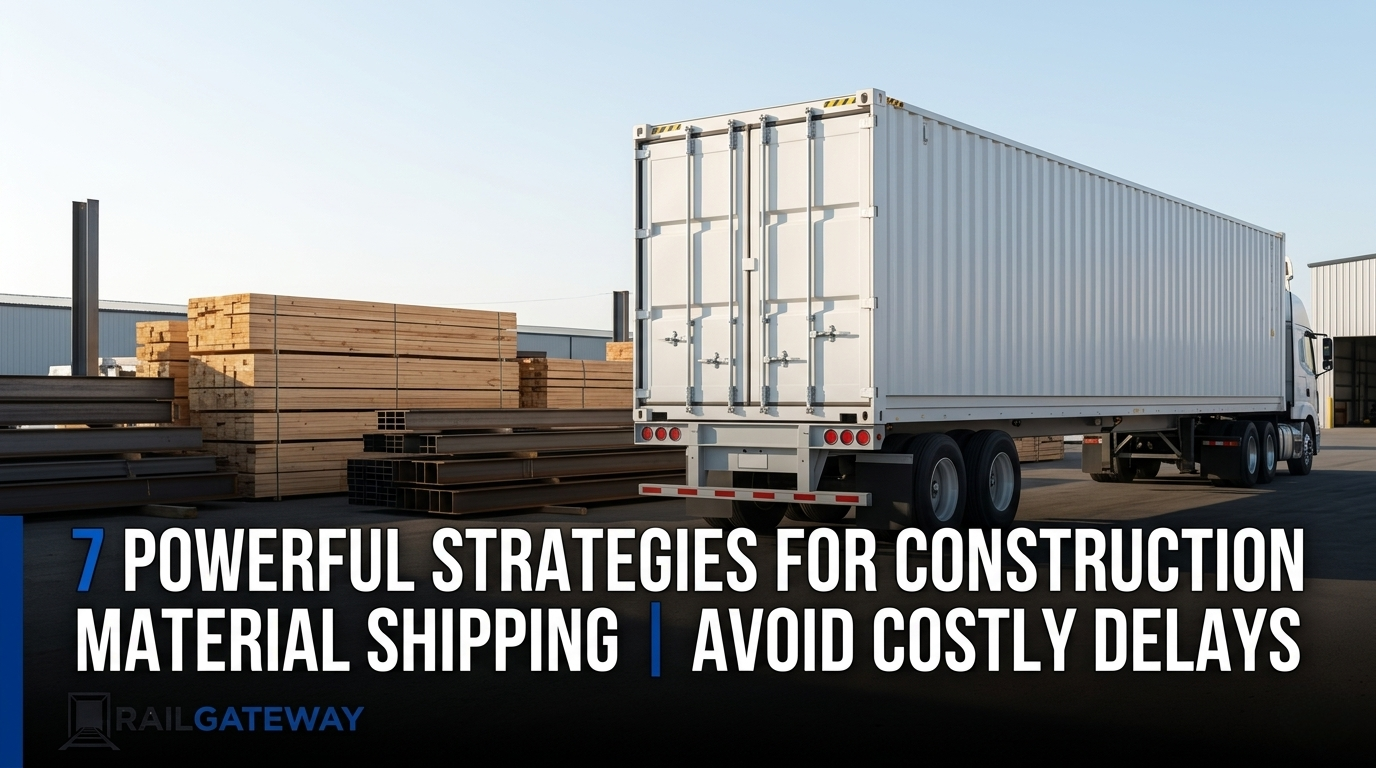
To master construction material shipping across Canada, procurement teams must leverage long-haul 40′ and 53′ intermodal rail containers to bypass road volatility and reduce the Price-per-Pound by 30-50% for high-density goods. RailGateway provides 100% pricing transparency and 75% lower emissions by directly connecting your heavy B2B freight to the massive scale of the CN and CPKC networks without the friction of traditional, asset-heavy brokers.
Key Takeaways
- The Weight-to-Rate Advantage: In 2026, routing your construction material shipping via intermodal rail reduces the ‘Price-per-Pound’ by 30-50% compared to traditional OTR trucking due to massive rail weight tolerances.
- Preventing the Drayage Deadlock: 70% of construction logistics failures in Canada occur in the final 50 miles. Proactively synchronizing final-mile drayage for your construction material shipping saves up to $400 per day in terminal storage fees.
- Tariff 7007 Compliance: Navigating the strict regulations of CN and CPKC tariffs ensures your construction material shipping moves safely without customs holds, rework penalties, or terminal rejections.
- Standardized Efficiency: Convert compatible freight into standard 40′ and 53′ enclosed containers to completely bypass the volatile flatbed spot market for construction material shipping during peak Q2 and Q3 construction seasons.
- Strict Operational Exclusions: RailGateway strictly executes B2B, long-haul, FCL domestic Canadian transit. We definitively exclude Less Than Truckload (LTL), hazmat (Class 1 & 7), motorized vehicles, and privately owned containers (SOC).
The foundation of profitable industrial material procurement lies in precise supply chain execution and rigorous cost mitigation. With over 35 years of logistics experience, the RailGateway team serves as your dedicated broker-auditor, designed specifically to handle the exacting complexities of construction material shipping. We convert the massive scale of Canada’s national rail infrastructure into a streamlined, direct-access advantage for high-volume B2B shippers who demand executive-level reliability.
When your commercial project relies on the seamless movement of massive freight volumes across multiple provinces – from the manufacturing hubs of Ontario to major infrastructure builds in Alberta or British Columbia – leaving your construction material shipping budget exposed to the daily volatility of highway trucking is an unacceptable risk. The Canadian logistics landscape in 2026 demands a highly engineered approach. Spot market fluctuations, persistent driver shortages, and the inherent inefficiencies of scaling over-the-road fleets can quickly erode a project’s profitability margin before the foundation is even poured.
By implementing the following seven advanced strategies, procurement teams can permanently optimize their construction material shipping logistics. You will learn exactly how to lock in your long-haul budgets, synchronize complex job site deliveries to avoid ruinous demurrage penalties, and ensure absolute Material Integrity from origin to destination across the country.
1. Leverage Enclosed FCL Rail for Cost-Effective Construction Material Shipping
Utilizing strictly 40′ and 53′ Full Container Loads (FCL) on CN and CPKC railways creates a stabilized, high-capacity financial hedge against the constant pricing volatility of standard highway trucking.
Understanding the underlying mechanics of construction material shipping is non-negotiable for project managers demanding absolute budget predictability. The fundamental reality of freight shipping Canada is that over-the-road (OTR) rates fluctuate wildly. They are dictated by daily driver availability, severe Canadian weather systems on the Trans-Canada Highway, and relentless retail diesel price spikes. A freight quote you receive for an OTR flatbed in February will likely be fundamentally obsolete by the time your construction material shipping phase begins in the peak heat of July.
Conversely, rail transport cost structures are mathematically grounded. Because diesel-electric locomotives are incredibly fuel-efficient – capable of moving one ton of freight nearly 500 miles on a single gallon of fuel – rail fuel surcharge adjustments (FSC) applied to your construction material shipping are significantly lower and far less erratic than their highway counterparts. This creates a highly predictable baseline for your transportation spend, ensuring your construction freight services stay on budget.
When you scale up the volume of your shipments, this predictability becomes your ultimate competitive advantage. Imagine the logistics required for shipping building materials like 50,000 lbs of commercial framing lumber, massive quantities of architectural steel, or palletized high-grade insulation across three provinces. Intermodal transport costs provide bulk-buy efficiency that standard trucking simply cannot support safely or economically.
RailGateway strictly operates on a single-point-of-entry model, ensuring 100% pricing transparency for all construction material shipping operations. Your rates remain locked, mathematically predictable, and fully optimized for the long haul. You are not penalized with hidden flatbed tarping fees, unexpected spot-market driver surcharges, or opaque brokerage markups. Instead, you secure massive long-haul capacity that scales directly alongside your project demands, allowing you to allocate project capital with executive-level certainty. Get a quote today to see the exact long-haul financial savings available for your next major construction material shipping phase.
2. Convert Compatible Freight to Bypass the Flatbed Premium
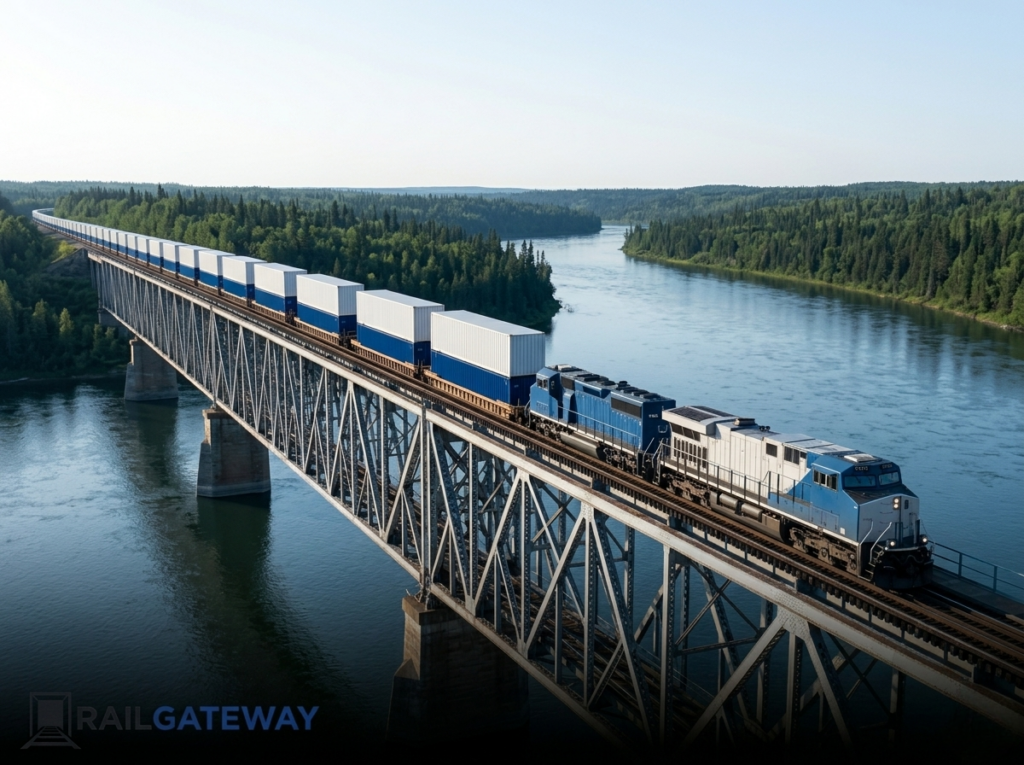
Shifting compatible building materials from highly volatile open-deck spot markets into standardized enclosed intermodal containers fundamentally insulates your supply chain from massive 40% peak-season price spikes.
In the realm of project cargo logistics Canada, procurement teams must make a highly strategic distinction between freight that truly demands open-deck specialized transport and freight that can be optimized for the standard intermodal rail network. Over-dimensional (OD) freight – like massive, indivisible steel bridge sections, towering wind turbine components, or fully assembled mining excavators – is at the absolute mercy of the OTR spot market. These shipments require specialized permits, pilot cars, restricted routing, and open-deck flatbeds that experience massive cost inflation during the Q2 and Q3 peak building seasons.
RailGateway explicitly does not handle Over-dimensional (OD) freight, nor do we utilize flatbed rail transport. Our entire operational model for construction material shipping is built upon the frictionless efficiency of standardization. Instead, our most successful B2B partners work with us to convert their compatible construction material shipping exclusively to 40′ and 53′ enclosed FCLs.
If your construction material shipping involves items like commercial HVAC ducting, standard structural fasteners, insulation rolls, commercial plumbing fixtures, or pre-cast concrete shipping (provided it meets the dimensional constraints of the container and can be loaded via standard heavy forklifts), our intermodal engine entirely bypasses the chaos of the flatbed premium.
Furthermore, enclosed 40′ and 53′ containers deliver a massive upgrade in Material Integrity for your construction material shipping. Open-deck trucking requires heavy-duty tarping to protect sensitive materials from rain, snow, and road debris. Tarping is inherently unreliable; high highway winds can tear tarps, leading to catastrophic water damage for engineered lumber or specialized drywall components. Enclosed standard containers completely eliminate the need for these unreliable tarping services, ensuring your high-value architectural millwork and building materials arrive perfectly insulated from harsh Canadian weather systems, drastically reducing costly insurance claims and project delays.
OTR Flatbed vs. Intermodal Construction Material Shipping
| Logistics Metric | Spot-Market OTR Trucking (Flatbed) | RailGateway Intermodal FCL (40’/53′) |
| Pricing Volatility | High (Subject to 40% peak season spikes) | Low (Stable, long-term financial hedge) |
| Emissions Profile | Standard baseline road emissions | 75% lower emissions |
| Weather Protection | Vulnerable (Tarping required, high risk) | Fully enclosed steel 40’/53′ container |
| Cost Efficiency | High Price-per-Pound for heavy freight | 30-50% lower Price-per-Pound |
| Quote Accuracy | Subject to daily spot fluctuations | 100% transparent Ramp-to-Door pricing |
3. Synchronize Long-Haul Drayage to Prevent Job Site Demurrage
Proactively aligning rail terminal arrivals with strict local job site receiving schedules permanently eliminates the escalating $400 daily terminal storage penalties known throughout the construction material shipping industry as demurrage.
According to extensive 2026 Canadian border shipping regulations and national infrastructure data, 70% of construction logistics failures in Canada occur in the final 50 miles of the journey. The long-haul transit across the prairies may be perfectly executed, but if the final delivery phase of your construction material shipping collapses, the financial fallout is severe. Using a specialized brokerage that proactively manages destination synchronization is the only way to safeguard the savings generated by your initial intermodal transport costs. This vital, highly complex detail is almost universally missed in automated, non-industry-specific digital freight quotes.
How does the Drayage Deadlock trigger catastrophic demurrage?
The “Drayage Deadlock” in construction material shipping occurs when a long-haul intermodal arrival is not perfectly synchronized with the final-mile truck extraction (known as drayage) and the ultimate delivery window of the active construction site. When your 53′ container of commercial framing arrives at the CN or CPKC destination terminal – say, the sprawling Brampton Intermodal Terminal or the Calgary Logistics Park – a very strict “free time” clock begins ticking.
Railways afford shippers managing construction material shipping a brief, non-negotiable window (often 24 to 48 hours) to physically remove the container from the yard. After this window expires, the railway assesses demurrage – a steep, daily penalty explicitly designed to punish containers that occupy valuable, highly congested terminal real estate.
Active sites waiting for construction material shipping deliveries are highly complex, unpredictable environments. They face strict municipal receiving hours, noise bylaws that prevent early morning unloading, severe crane availability limitations, delayed site readiness, and intense local traffic congestion. If the rail terminal demands the container be moved immediately, but your job site cannot physically accept the delivery for 72 hours because the foundation isn’t fully cured, the resulting job site demurrage fees will quickly obliterate your construction material shipping budget.
Because RailGateway focuses exclusively on long-haul transit and does not offer short-haul drayage as a standalone service, our energy is fully dedicated to choreographing this complex Ramp-to-Door transition for your construction material shipping. We manage the intense, multi-party communication between the rail terminal, the drayage carrier, and the site foreman. If a job site delay is inevitable, we execute advanced strategies like “pre-pulling” – where we extract the container from the rail ramp before free time expires and hold it in a secure, lower-cost local yard until the job site is ready. This ensures your heavy construction material shipping flows seamlessly without incurring a single dollar of terminal penalty.
4. Enforce Tariff 7007 Compliance to Protect Construction Material Shipping
Auditing all heavy B2B construction freight against strict CN and CPKC blocking, bracing, and weight distribution regulations guarantees your cargo passes initial terminal intake without disastrous rework penalties.
When managing heavy industrial freight and construction material shipping, generic brokers and traditional trucking dispatchers often fundamentally fail to grasp the rigid, unforgiving operational rules enforced by Class 1 railroads. Unlike independent trucking companies that operate with a degree of leniency on the highway, CN and CPKC operate under massive, federally regulated tariffs. Specifically, Tariff 7007 dictates exactly how construction material shipping must be mechanically executed inside a container.
This tariff outlines non-negotiable guidelines for construction material shipping concerning weight distribution across axles, maximum payloads for 40′ versus 53′ containers, and exactly how dense, heavy materials must be blocked and braced. Rail transit involves unique physics. During the assembly of a massive 10,000-foot freight train in a marshaling yard, locomotives engage in a process called “shunting.” This causes sudden, intense longitudinal impacts to run through the entire length of the train.
If heavy construction material shipping items – such as pre-cast concrete shipping components or massive spools of industrial copper wire – are not rigorously blocked and braced with heavy-duty dunnage according to Tariff 7007, that freight becomes a 40,000-pound battering ram inside the container.
Failing to achieve Tariff 7007 compliance in construction material shipping results in immediate, severe consequences. If a container of structural steel is improperly loaded or visually exceeds the mathematical weight limits on the chassis axles, the railway safety inspectors will immediately red-tag it during terminal intake. The container is permanently sidelined. The shipper then becomes fully liable for the exorbitant costs of hiring specialized third-party terminal labor to unload, re-brace, and re-weigh the entire load – adding thousands of dollars and weeks of delay to the construction material shipping timeline.
With 35+ years of intermodal experience, RailGateway meticulously audits every single shipment for tariff compliance before it ever reaches the rail ramp. We provide expert engineering guidance on optimal weight distribution and dunnage requirements to ensure your intermodal transport costs are utilized safely, legally, and without a single moment of regulatory delay for your construction material shipping operations.

5. Audit Material Density to Optimize Construction Material Shipping Costs
Loading high-density building materials inside heavy-rated 40′ intermodal containers drastically lowers the overall intermodal transport costs, reducing your Price-per-Pound metric by 30-50%.
The “Weight-to-Rate” ratio is a foundational, high-level metric for optimizing construction material shipping procurement. The fundamental reality of shipping building materials is that items like commercial ceramic tiles, engineered brick, architectural stone, and structural steel fasteners are exceptionally heavy but relatively compact. They “weigh out” long before they “cube out.”
A standard 40-foot container is mathematically engineered for this exact construction material shipping scenario. It safely carries incredibly dense payloads that maximize the legal weight limits of the transport chassis long before filling the physical, volumetric space of a larger 53-foot high-cube box.
Why is intermodal mathematically cheaper for heavy construction material shipping?
Railways possess fundamentally higher weight-bearing capacities than over-the-road highways. While a standard highway truck is severely limited by strict provincial axle-weight laws and seasonal load restrictions (such as Spring Thaw restrictions in Northern Canada), the national rail network is built specifically for heavy industry and extreme construction material shipping volumes.
By auditing your freight density and utilizing heavy-duty intermodal containers, procurement teams can safely pack significantly more mass into a single, unified transit movement. If your construction material shipping requires moving 60,000 lbs of commercial flooring, doing so via OTR trucking might require splitting the load into two separate, expensive flatbed or dry van shipments to remain street legal across provincial lines. With RailGateway’s intermodal network, that dense payload can often be managed within a single, optimized heavy-weight rail movement.
This unique capability unlocks massive bulk-buy freight discounts that highway trucking simply cannot legally or mechanically support. By maximizing your payload density for your construction material shipping, you drive your Price-per-Pound cost down by 30-50%, all while maintaining supreme executive-level reliability for your construction freight services.
6. Transition Construction Material Shipping to Meet ESG Mandates
Shifting long-haul building material transportation from highway trucking to the national rail network allows construction firms to instantly achieve up to a 75% reduction in carbon emissions, satisfying strict 2026 Scope 3 reporting requirements.
The true art of industrial material procurement is knowing exactly when to pivot your construction material shipping away from saturated, high-emission freight lanes. When supply chain executives rely exclusively on highway trucking for shipping building materials, they miss a critical, high-value opportunity to align with rapidly evolving Environmental, Social, and Governance (ESG) mandates.
In 2026, corporate sustainability in construction material shipping is no longer a marketing buzzword; it is a rigid prerequisite for doing business. Major construction firms bidding on lucrative provincial and federal government infrastructure projects, or developing commercial real estate for publicly traded conglomerates, are now mandated to track and radically reduce their “Scope 3” supply chain emissions. Relying on fleets of diesel trucks to manage massive construction material shipping projects across 3,000 miles of highway creates a massive, highly scrutinized carbon footprint.
RailGateway’s intermodal network yields dramatically lower emissions for construction material shipping. As previously mentioned, the physics of steel wheels on steel rails allow locomotives to move a ton of freight roughly 500 miles on a single gallon of diesel fuel. This unparalleled efficiency translates to an immediate 75% reduction in greenhouse gas emissions compared to standard long-haul OTR trucking over the exact same trans-continental lane.
Proving that your construction material shipping is environmentally optimized provides a massive, quantifiable competitive advantage during the project procurement and bidding phase. By intentionally transitioning compatible items – like commercial flooring, heavy insulation, rolled roofing, and plumbing fixtures – into our intermodal network, you satisfy both your strict financial budget and your uncompromising corporate environmental requirements. It is a strategic move that modernizes your supply chain while directly protecting the Canadian environment.
The RailGateway Fact Block: Construction Material Shipping
- The 30-50% Weight-to-Rate Reduction: Moving high-density building materials inside 40′ intermodal containers significantly reduces the Price-per-Pound metric compared to standard OTR transport.
- $400 Daily Demurrage Savings: Proactive Ramp-to-Door synchronization completely bypasses the terminal storage penalties that often plague unorganized construction sites.
- 75% Lower ESG Emissions: Locomotives dramatically outperform long-haul OTR trucking in fuel efficiency, instantly improving corporate Scope 3 emissions reporting.
- 35+ Years of Auditing Expertise: Decades of specialized experience ensuring absolute Tariff 7007 compliance for B2B heavy construction freight.

7. Centralize Construction Material Shipping with a Broker-Auditor
Partnering with a single-point-of-entry intermodal expert systematically bypasses Class 1 railroad bureaucracy, guaranteeing 100% pricing transparency and eliminating the risk of hidden final-mile surcharges in your construction material shipping.
Navigating the internal, deeply entrenched bureaucracies of CN and CPKC to execute construction material shipping requires decades of established operational leverage and a mastery of niche logistics vocabulary. Most B2B shippers simply do not possess the internal procurement infrastructure required to aggressively dispute erroneous demurrage charges, manually audit mathematically complex fuel surcharge adjustments week over week, or negotiate accessorial fees with terminal managers.
Attempting to manage complex project cargo logistics Canada directly with the railroad often results in systemic communication breakdowns, hidden invoices, and a frustrating lack of customer support regarding your critical construction material shipping.
RailGateway exists to centralize and completely streamline this entire process for you. To maintain our position as the largest intermodal engine in Canada for construction material shipping, we operate as a dedicated broker-auditor. We do the heavy lifting behind the scenes so your procurement team can focus on building, not tracking containers.
To achieve this level of executive reliability for construction material shipping, we enforce incredibly strict operational boundaries. We utilize exclusively CN and CPKC railway-owned equipment, ensuring peak network velocity. We explicitly do not transport private Shipper Owned Containers (SOC), eliminating the massive liabilities of repositioning empty private boxes. We definitively do not transport Less Than Truckload (LTL) pallets or offer consolidation services for small businesses. We refuse all hazmat materials (Class 1 explosives & Class 7 radioactive materials), motorized vehicles, and non-containerized loose bulk commodities like loose grain, liquid tankers, or coal.
Furthermore, we exclude all emergency, “must-be-there-tomorrow” overnight courier speed requests. We are a high-capacity hedge for planned construction material shipping, not an airplane. We absolutely do not offer residential deliveries, personal consumer moves, or specialized white-glove inside uncrating services. Our operational responsibility begins and ends squarely at the commercial dock or the intermodal rail ramp.
By aggressively defending these operational exclusions, RailGateway ensures that your compatible construction material shipping flows with absolute, friction-free momentum. Our responsibility is strictly high-capacity, long-haul FCL volume designed for proactive, intelligent supply chain planners. Stop bleeding your hard-earned project margin to spot-market chaos, hidden flatbed premiums, and unmanaged terminal demurrage.
- Get an Intermodal Rail Quote
- Contact our team of specialists
- RailGateway Intermodal Rail for Construction & Building Materials
- Learn more about RailGateway
FAQ: Optimizing Your Construction Material Shipping
Q: How does construction material shipping on rail reduce the “Price-per-Pound”?
A: Due to significantly higher weight-bearing tolerances on the CN and CPKC rail networks compared to over-the-road highways, routing your construction material shipping inside 40′ heavy-duty containers allows shippers to safely maximize payload density. This bulk-buy capability can reduce the final Price-per-Pound by 30-50% compared to traditional OTR trucking.
Q: What is the Drayage Deadlock in construction material shipping?
A: The Drayage Deadlock occurs when long-haul rail arrivals misalign with strict, unpredictable job site receiving schedules. Because rail terminals offer very limited “free time,” this misalignment triggers severe job site demurrage – costing up to $400 per day in penalties. RailGateway prevents this through precise, synchronized Ramp-to-Door coordination.
Q: Can I manage Over-dimensional (OD) freight through your construction material shipping service?
A: No. RailGateway strictly handles compatible heavy construction material shipping that fits entirely within standard 40′ and 53′ enclosed intermodal containers. We do not utilize open flatbed rail transport or handle OD project cargo, allowing us to completely avoid the massive, unpredictable cost volatility of the specialized OD spot market.
Q: What is Tariff 7007 and why does it matter for construction material shipping in Canada?
A: Tariff 7007 is a strict set of federally regulated railway rules dictating exactly how construction material shipping must be distributed, blocked, and braced inside a container to withstand the longitudinal forces of rail yard shunting. Failing to comply results in your container being red-tagged, leading to massive delays and exorbitant third-party terminal rework fees.
Q: Does RailGateway handle LTL or residential delivery for construction material shipping?
A: No. RailGateway strictly manages B2B Full Container Loads (FCL) for long-haul construction material shipping. We do not consolidate freight, offer LTL pallet-rates, handle residential deliveries, transport personal/household goods, or provide white-glove inside uncrating services. Our focus is strictly long-haul, high-capacity intermodal volume.